odd
/ɑːd/Strange or unusual; not able to be divided exactly by the number two; or happening occasionally.
Tiếng Việt
kỳ quặc, lẻ, hoặc rảnh rỗi
ót-đờ
Phát âm giống từ 'ót' trong tiếng Việt nhưng kết thúc bằng âm 'd' nhẹ ở cuối lưỡi.
Kỳ lạ hoặc bất thường; số không chia hết cho hai (số lẻ); hoặc việc gì đó xảy ra không thường xuyên.
Meanings
10 meanings
1Strange or unusual; different from what is ordinary or expected.adjectivedaily life
Kỳ lạ hoặc bất thường; khác biệt so với những gì bình thường hoặc mong đợi.
“They're very odd people.”
“Họ là những người rất kỳ quặc.”
- I didn't think it odd at the time.
- I find it odd that she takes so long to do that job.
- She had the oddest feeling that he was avoiding her.
- That’s odd – I thought I left my glasses on the table but they’re not here.
Dùng để mô tả một tình huống hoặc người nào đó gây ngạc nhiên vì sự khác lạ. Có thể dùng thay cho 'strange' nhưng đôi khi mang tính phê phán nhẹ hơn.
2(of numbers) That cannot be divided exactly by the number two.adjectiveeducation
(Về con số) Không thể chia hết cho hai.
“1, 3, 5 and 7 are odd numbers.”
“1, 3, 5 và 7 là những số lẻ.”
- What happens if you add two odd numbers together?
- The houses on this side of the street have odd numbers.
Trong toán học, luôn dùng 'odd' cho số lẻ và 'even' cho số chẵn. Tránh nhầm lẫn với nghĩa 'kỳ lạ'.
3Happening or appearing occasionally; not happening often or regularly.adjectivework career
Xảy ra hoặc xuất hiện thỉnh thoảng; không thường xuyên hoặc không đều đặn.
“He makes the odd mistake—nothing too serious.”
“Thỉnh thoảng anh ấy cũng mắc lỗi—nhưng không có gì quá nghiêm trọng.”
- I still do the odd bit of consultancy work.
- We have the odd disagreement, but we're generally very good friends.
Khi đứng trước danh từ số ít, 'the odd...' có nghĩa là 'một vài trường hợp hiếm hoi' hoặc 'thỉnh thoảng mới có'.
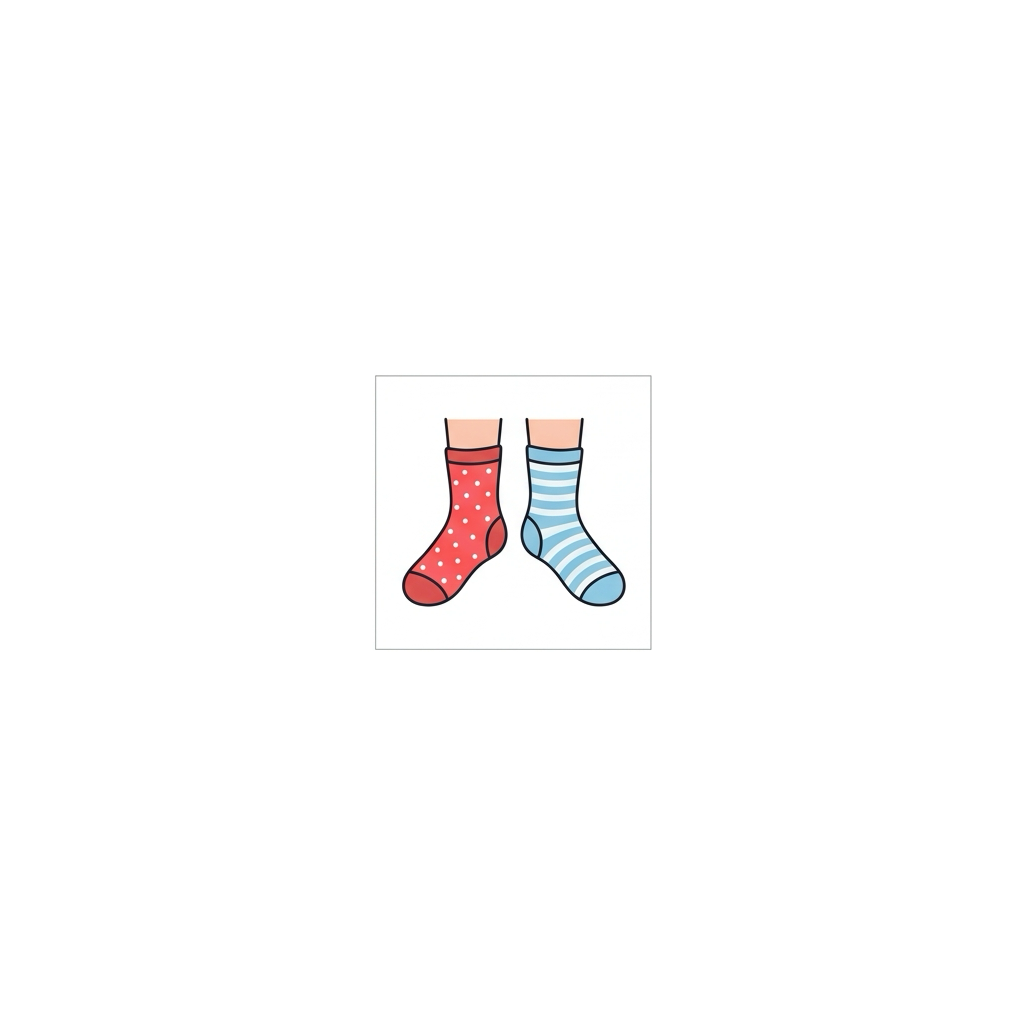
4Not with the pair or set that it belongs to; not matching.adjectivedaily life
Không đi cùng với đôi hoặc bộ mà nó thuộc về; không khớp, bị lẻ.
“You're wearing odd socks!”
“Bạn đang đi tất chiếc nọ chiếc kia kìa!”
- He’s got a whole drawer full of odd socks.
- I've got a few odd tea cups left from the original set.
Dùng để chỉ các đồ vật thường đi theo đôi (như tất, giày) nhưng bị lạc mất một chiếc hoặc bị phối nhầm.
5Of no particular type or size; various and miscellaneous.adjectivedaily life
Không thuộc loại hoặc kích cỡ cụ thể nào; đa dạng và hỗn tạp (vặt vãnh).
“The table was covered with odd scraps of paper.”
“Mặt bàn đầy những mẩu giấy vụn vặt.”
- She used up odd bits of wool to make the scarf.
- He picked up odd jobs wherever he could find them.
Thường dùng trong cụm 'odd jobs' (việc lặt vặt) hoặc 'odd bits' (những mảnh vụn).
6Available; that someone can use; spare.adjectivecommunication
Rảnh rỗi; có sẵn để ai đó sử dụng; dư ra.
“Could I see you when you've got an odd moment?”
“Tôi có thể gặp bạn khi bạn có chút thời gian rảnh không?”
- I'll try to finish the book in my odd moments.
- He spent his odd hours gardening.
Nghĩa này khá trang trọng và ít dùng hơn, thường dùng trong cụm 'odd moments' hoặc 'odd hours'.
7Used after a number to mean 'approximately' or 'a little more than'.adjectivefinance
Dùng sau một con số để chỉ sự 'xấp xỉ' hoặc 'hơn một chút'.
“How old is she—seventy odd?”
“Bà ấy bao nhiêu tuổi rồi—bảy mươi mấy à?”
- There were 50-odd people at the meeting.
- The repairs will cost 200-odd pounds.
Cấu trúc này rất phổ biến trong giao tiếp. Ví dụ 'thirty-odd' tương đương với 'ba mươi mấy' hoặc 'ba mươi lẻ' trong tiếng Việt.
8Used after a number, especially a number divisible by ten, to indicate an approximate or slightly higher amount.adverbgeneral
Dùng sau một con số (đặc biệt là số tròn chục) để chỉ một lượng xấp xỉ hoặc cao hơn một chút.
“He holds another 50-odd acres of land in reserve.”
“Ông ấy còn dự trữ khoảng hơn 50 mẫu đất nữa.”
- I'd say Robert's about 40-odd - maybe 45.
- The journey took three-odd hours.
Lưu ý cách dùng dấu gạch nối (hyphen) khi viết: '50-odd'. Trong văn nói có thể không cần gạch nối.
9Something that is left over or does not form part of a complete set.noundaily life
Thứ gì đó còn sót lại hoặc không nằm trong một bộ hoàn chỉnh.
“She collected the odds and ends from the workshop floor.”
“Cô ấy thu dọn những thứ lặt vặt còn sót lại trên sàn xưởng.”
- The shop sells odds of fabric at a discount.
- He was the odd man out in the group.
Thường xuất hiện trong thành ngữ 'odds and ends' có nghĩa là 'những thứ linh tinh, vụn vặt'.
10In mathematics, an odd number.nouneducation
Trong toán học, nghĩa là một số lẻ.
“The sequence consists of three odds followed by one even.”
“Dãy số gồm ba số lẻ theo sau là một số chẵn.”
- Check if the result is an odd or an even.
Sử dụng như một danh từ đếm được trong ngữ cảnh kỹ thuật hoặc toán học.
Word bank
Synonyms
Near synonyms
Common phrases
- odd number
- odd socks
- odd job
- odd moment
- odd look
- how odd
- forty-odd
- fifty-odd
- hundred-odd
- odds and ends
- odd man out
Grammar & forms
Grammar
- linking
- countable
Inflections
- comparative
- odder
- superlative
- oddest
Word family
- oddlyadverb
- oddity, oddness, oddsnoun
Usage patterns
- it is odd that...
- find something odd
- the odd something
Avoid mistakes
Common mistakes
He is an odd.
He is an odd person. / He is an oddball.
In general English, 'odd' is an adjective and needs a noun to follow it when describing a person.
The house number is an even, not an odd.
The house number is even, not odd.
When referring to numbers, use 'odd' and 'even' as adjectives without 'an'.
I have twenty and odd dollars.
I have twenty-odd dollars.
The 'approximate' sense of 'odd' follows the number directly with a hyphen.
The odds number is 7.
The odd number is 7.
Use the singular adjective 'odd' to describe the number, not the plural 'odds'.
It strikes me oddly that he left.
It strikes me as odd that he left.
Use 'strike someone as odd' as a fixed phrase; 'oddly' is an adverb of manner.
Don't confuse with
- odds
The probability or chances of something happening.
“The odds of winning the lottery are very low.”
Do not confuse the adjective 'odd' (strange) with the plural noun 'odds' (probability).
- weird
Very strange in a way that is unsettling or hard to explain.
“It was a weird coincidence.”
'Weird' often implies something supernatural or unsettling, whereas 'odd' is more general.
Academic collocations
Words that pair with "odd" in formal and academic writing
- verb
- beseemlookfeelstrike someone as
- adjective
- decidedlysomewhatratherextremely
- noun
- numberjobmomentoccurrence
- preposition
- atin
In context
Real-world examples
- daily life
It’s a bit odd that he hasn’t called yet.
Hơi lạ là anh ấy vẫn chưa gọi điện.
Trong văn hóa Việt Nam, việc giữ liên lạc là rất quan trọng để thể hiện sự quan tâm, nên việc không gọi điện thường được coi là bất thường.
- work career
He took on various odd jobs to pay for his tuition.
Anh ấy đã làm đủ thứ việc lặt vặt để đóng học phí.
Cụm từ 'việc lặt vặt' rất phổ biến đối với sinh viên Việt Nam khi đi làm thêm không cố định.
- academic
The house is on the side of the street with odd numbers.
Ngôi nhà nằm ở phía bên số lẻ của con phố.
Hệ thống đánh số nhà ở Việt Nam thường chia một bên số chẵn và một bên số lẻ, giống như ở phương Tây.
- daily life
There were thirty-odd people at the family gathering.
Có khoảng ba mươi mấy người tại buổi họp mặt gia đình.
Cách nói 'ba mươi mấy' tương đương với 'thirty-odd' để chỉ một số lượng xấp xỉ nhưng lớn hơn một chút.
Notes for Vietnamese speakers
- Trong toán học Việt Nam, 'odd number' luôn được dịch là 'số lẻ'.
- Từ 'odd' khi dùng chỉ người có thể mang sắc thái hơi tiêu cực (kỳ quặc) hoặc trung tính tùy ngữ cảnh, tương tự như từ 'lạ đời' trong tiếng Việt.
- Cụm từ 'odd jobs' tương ứng với khái niệm 'việc làm thêm không tên' hoặc 'việc vặt' trong đời sống người Việt.
Etymology
Middle English: from Old Norse 'oddi' meaning 'third or additional number' or 'triangle', originally from 'oddr' meaning 'point of a weapon'. The sense of 'strange' developed in the 16th century from the notion of something being 'additional' or 'unpaired'. Source: Oxford Dictionary of English Etymology.
Exam levels
CEFR
B1
TOEIC
505-600
More in Vietnamese
- TFlat Dictionary (Soha)
Cung cấp các ví dụ thực tế và cách dùng từ 'odd' trong nhiều ngữ cảnh.
- Cambridge English–Vietnamese Dictionary
Nghĩa tiếng Việt kèm ví dụ từ Cambridge Dictionary.
- VDict (Anh–Việt)
Từ điển Anh–Việt với ví dụ song ngữ.