anger
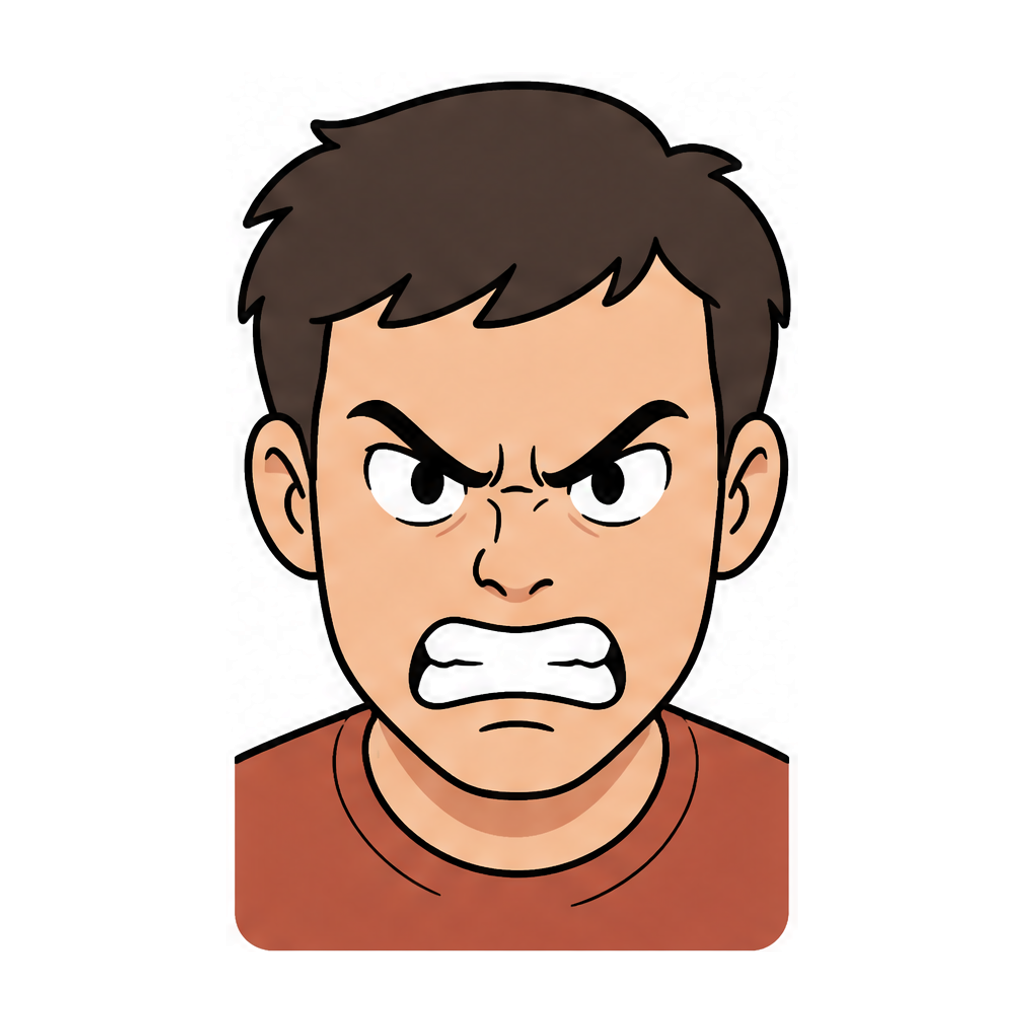
/ˈæŋɡər/A strong feeling of annoyance, displeasure, or hostility usually caused by something bad or unfair
Tiếng Việt
sự tức giận
ĂNG-gờ
Nhấn mạnh vào âm ĂNG, âm 'gờ' đọc nhẹ và nhanh ở cuối.
Một cảm giác khó chịu, không hài lòng hoặc thù địch mạnh mẽ thường gây ra bởi một điều gì đó tồi tệ hoặc bất công.
Meanings
3 meanings
1The strong feeling that you have when something has happened that you think is bad and unfairnounemotions
Cảm giác mạnh mẽ khi một điều gì đó tồi tệ hoặc bất công xảy ra
“She had to find a way to express her pent-up anger.”
“Cô ấy phải tìm cách để giải tỏa sự tức giận bị kìm nén của mình.”
- Hank stood up, his anger rising.
- He slammed the door in a fit of anger.
- She felt a brief flash of anger.
- Much of the public's anger was directed at the government.
'Pent-up anger' là một cụm từ rất hay để mô tả sự giận dữ tích tụ lâu ngày không được giải tỏa.
2A strong feeling of displeasure and belligerence aroused by a wrongnounemotions
Cảm giác không hài lòng mạnh mẽ và sự hung hăng nảy sinh do một sai trái nào đó
“You need to control your anger.”
“Bạn cần phải kiểm soát cơn giận của mình.”
- He yelled at them in anger.
- His eyes were filled with anger.
- It is not healthy to suppress your anger.
Trong tiếng Việt, 'control your anger' tương đương với 'kiềm chế cơn giận'. Đây là một collocation phổ biến.
3To make somebody feel angryverbemotions
Làm cho ai đó cảm thấy tức giận
“The question clearly angered him.”
“Câu hỏi đó rõ ràng đã làm anh ấy tức giận.”
- He is not easily angered.
- They stayed silent but were angered by the decision.
- It always angers me to see so much waste.
Mặc dù 'anger' có thể dùng làm động từ, nhưng trong giao tiếp thông thường, người bản ngữ hay dùng 'make someone angry' hơn.
Word bank
Synonyms
Near synonyms
Common phrases
- express anger
- control anger
- suppress anger
- deep anger
- fierce anger
- pent-up anger
- fit of anger
- flash of anger
- anger management
- seethe with anger
- deeply angered
- greatly angered
- easily angered
- be angered by
Grammar & forms
Avoid mistakes
Common mistakes
She was anger at him.
She was angry with him.
Use the adjective 'angry' to describe a person's state, not the noun 'anger'.
He has a big anger.
He has a lot of anger.
'Anger' is typically uncountable; use 'a lot of' or 'much' instead of 'big'.
I am angering.
I am getting angry.
While 'anger' is a verb, 'getting angry' is the common way to describe becoming angry in spoken English.
anger against someone
anger towards someone
While 'against' is possible, 'towards' or 'at' are more common prepositions for the direction of anger.
make an anger
express anger
We do not 'make' an anger; we express, show, or feel it.
Don't confuse with
- fury
extreme strength of anger
“He shouted in a fury.”
Fury is much stronger than anger.
Academic collocations
Words that pair with "anger" in formal and academic writing
- verb
- expresssuppressprovoke
- adjective
- widespreadgrowingintense
- noun
- managementoutburstexpression
- preposition
- atovertowards
In context
Real-world examples
- daily life
He struggled to control his anger during the argument.
Anh ấy đã cố gắng kiềm chế cơn giận của mình trong cuộc tranh cãi.
Trong văn hóa Việt Nam, việc giữ bình tĩnh và kiềm chế cảm xúc mạnh nơi công cộng thường được coi là dấu hiệu của sự trưởng thành.
- academic
The decision to cut benefits provoked widespread public anger.
Quyết định cắt giảm phúc lợi đã gây ra sự phẫn nộ rộng rãi trong công chúng.
Sử dụng từ 'phẫn nộ' thay cho 'tức giận' khi nói về các vấn đề xã hội hoặc chính trị để thể hiện mức độ nghiêm trọng.
- business
Unresolved anger in the workplace can lead to low productivity.
Sự tức giận không được giải quyết tại nơi làm việc có thể dẫn đến năng suất thấp.
Kỹ năng quản trị cảm xúc (EQ) đang ngày càng được coi trọng trong môi trường doanh nghiệp hiện đại tại Việt Nam.
- daily life
She spoke with a hint of anger in her voice.
Cô ấy nói với một chút giận dữ trong giọng điệu.
Người Việt thường chú ý đến sắc thái giọng nói để đoán biết cảm xúc của đối phương (ý tại ngôn ngoại).
Notes for Vietnamese speakers
- Trong văn hóa Việt Nam, 'giận' thường đi kèm với việc im lặng hoặc tránh mặt để giữ hòa khí (dĩ hòa vi quý).
- Thành ngữ 'Giận quá mất khôn' khuyên con người nên bình tĩnh để tránh đưa ra những quyết định sai lầm khi đang nóng giận.
- Từ 'tức' (dạng rút gọn của tức giận) thường được dùng phổ biến hơn trong giao tiếp hàng ngày.
Etymology
Middle English: from Old Norse angr 'grief', of Germanic origin; related to German eng 'narrow' and English anguish.
Exam levels
IELTS
6.0
CEFR
B2
TOEIC
705-800
More in Vietnamese
- TFlat Dictionary (Soha)
Cung cấp nhiều ví dụ và các cụm từ liên quan trong ngữ cảnh Việt ngữ.
- Cambridge English–Vietnamese Dictionary
Nghĩa tiếng Việt kèm ví dụ từ Cambridge Dictionary.
- VDict (Anh–Việt)
Từ điển Anh–Việt với ví dụ song ngữ.