fruit
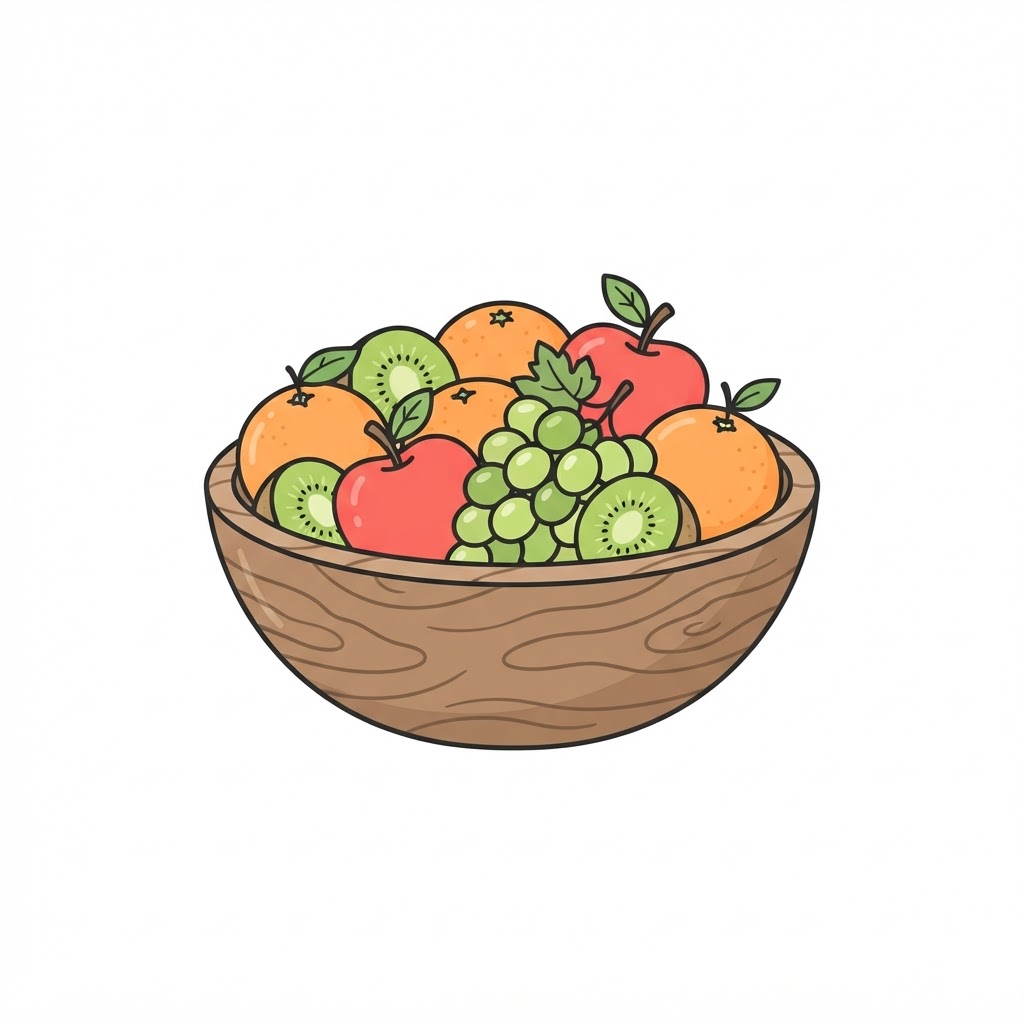
/fruːt/The edible part of a plant that contains seeds, or the successful result of an activity or situation.
Tiếng Việt
hoa quả / trái cây
ph-rút
Phát âm âm 'f' nhẹ, sau đó nối nhanh sang âm 'ru' kéo dài và kết thúc bằng âm 't' bật nhẹ ở cuối lưỡi.
Bộ phận ăn được của thực vật có chứa hạt, hoặc kết quả thành công của một hoạt động hay tình huống nào đó.
Meanings
6 meanings
1The part of a plant that consists of one or more seeds and a soft inner part, which can be eaten as food and usually tastes sweet.nounfood
Bộ phận của thực vật bao gồm một hoặc nhiều hạt và phần thịt mềm bên trong, có thể dùng làm thức ăn và thường có vị ngọt.
“Eat plenty of fresh fruit and vegetables.”
“Hãy ăn thật nhiều hoa quả và rau củ tươi.”
- Tropical fruits, such as bananas and pineapples, are exported worldwide.
- I usually eat a piece of fresh fruit with my lunch.
- The tree produces small, red, berry-like fruits.
Trong tiếng Anh, 'fruit' thường không đếm được khi nói chung về hoa quả. Đừng nói 'many fruits' trừ khi bạn muốn nhấn mạnh các chủng loại khác nhau.
2The good results of an activity, situation, or hard work.noungeneral
Kết quả tốt đẹp của một hoạt động, tình huống hoặc sự nỗ lực làm việc.
“They are finally enjoying the fruits of their many years of hard work.”
“Cuối cùng họ cũng đang được tận hưởng những thành quả sau nhiều năm làm việc vất vả.”
- The fruits of economic growth are starting to make a difference.
- He was now reaping the fruits of all his hard work.
- This book is the fruit of several years' research.
Ở nghĩa này, 'fruits' (số nhiều) thường được dùng để chỉ các lợi ích hoặc kết quả cụ thể đạt được.
3The part of a plant or tree that is formed after the flowers have died and in which seeds develop.nountechnical
Bộ phận của cây hoặc cây thân gỗ được hình thành sau khi hoa tàn và là nơi hạt phát triển.
“The crab apple bears a small, bitter fruit.”
“Cây táo dại ra loại quả nhỏ và đắng.”
- The botanical definition of a fruit includes tomatoes and pumpkins.
- The fruit ripens in late autumn.
Đây là nghĩa chuyên môn sinh học. Lưu ý cụm 'bear fruit' nghĩa là ra quả/có quả.
4All the natural things that the earth produces.nounliterary
Tất cả những sản vật tự nhiên mà trái đất tạo ra.
“We should be grateful for the fruits of the earth.”
“Chúng ta nên biết ơn những sản vật của đất trời.”
Cụm từ này mang sắc thái trang trọng, thường dùng trong văn chương hoặc tôn giáo.
5An extremely offensive word for a gay man.nounslang
Một từ cực kỳ xúc phạm dùng để chỉ người đồng tính nam.
“[Example omitted for offensive content]”
“[Ví dụ bị lược bỏ vì nội dung xúc phạm]”
Đây là từ lóng mang tính miệt thị cao, tuyệt đối không nên sử dụng trong giao tiếp.
6To produce fruit, seeds, or spores.verbdaily life
Đơm hoa kết trái, tạo ra hạt hoặc bào tử.
“Over the last few years, our apple trees have been fruiting much earlier than usual.”
“Trong vài năm qua, những cây táo của chúng tôi đã ra quả sớm hơn nhiều so với bình thường.”
- The bushes fruit in late summer.
- Most of the trees have fruited well this year.
Động từ 'fruit' là nội động từ, nghĩa là bạn không thể dùng nó kèm với tân ngữ (ví dụ: không nói 'fruit apples').
Word bank
Grammar & forms
Grammar
- countable
- uncountable
- intransitive
Inflections
- plural
- fruits
- third_person_singular
- fruits
- past_simple
- fruited
- past_participle
- fruited
- present_participle
- fruiting
Word family
Usage patterns
- fruit of something
- piece of fruit
- fresh/ripe fruit
- fruit early
- fruit well
Avoid mistakes
Common mistakes
I bought many fruits at the market.
I bought a lot of fruit at the market.
Fruit is usually uncountable when referring to quantity. Use 'fruits' only when referring to different types/varieties.
She ate three fruits for breakfast.
She ate three pieces of fruit for breakfast.
To count fruit, use the phrase 'pieces of fruit'.
The tree is fruiting many apples.
The tree is producing/bearing many apples.
The verb 'fruit' is intransitive; it does not take an object. You cannot 'fruit something'.
This is the fruit of his labors.
This is the fruit of his labor. / These are the fruits of his labor.
In the metaphorical sense, both singular and plural are used, but they must agree with the verb.
He ate a fruit juice.
He drank some fruit juice.
Fruit juice is a liquid and is uncountable.
Don't confuse with
- vegetable
Plants used as food, typically savory rather than sweet.
“Carrots are vegetables; apples are fruits.”
Botanically, some vegetables (like tomatoes) are fruits, but in cooking, they are separated by taste.
- fruition
The point at which a plan or project is realized.
“Her plans finally came to fruition.”
Do not confuse 'fruition' with 'fruiting' (the act of a plant producing fruit).
Academic collocations
Words that pair with "fruit" in formal and academic writing
- verb
- bearyieldproducereap
- adjective
- abundanttangiblesuccessfulbitter
- noun
- laboreffortresearchsuccess
- preposition
- offrom
In context
Real-world examples
- daily life
In Vietnam, people often offer fresh fruit on the altar during the Lunar New Year.
Ở Việt Nam, mọi người thường dâng hoa quả tươi lên bàn thờ trong dịp Tết Nguyên Đán.
Hoa quả là lễ vật không thể thiếu trong thờ cúng tổ tiên của người Việt, đặc biệt là mâm ngũ quả.
- business
The new policy is finally bearing fruit in the local economy.
Chính sách mới cuối cùng đã mang lại thành quả cho nền kinh tế địa phương.
Cách dùng ẩn dụ 'bear fruit' (đơm hoa kết trái) rất tương đồng với cách diễn đạt trong tiếng Việt khi nói về thành công.
- academic
Botanically speaking, a tomato is a fruit, not a vegetable.
Về mặt thực vật học, cà chua là một loại quả, không phải là rau.
Phân biệt giữa định nghĩa khoa học và cách gọi thông thường trong nội trợ là một chủ đề phổ biến trong giáo dục tại Việt Nam.
Notes for Vietnamese speakers
- Tại Việt Nam, từ 'trái cây' phổ biến hơn ở miền Nam, trong khi miền Bắc thường dùng từ 'hoa quả'.
- Mâm ngũ quả ngày Tết là một nét văn hóa đặc trưng, tượng trưng cho ngũ hành và ước nguyện bình an, sung túc.
- Khác với phương Tây, nhiều loại quả tại Việt Nam có thể được ăn kèm với muối ớt hoặc mắm đường.
Etymology
Middle English: from Old French fruit, from Latin fructus 'enjoyment, possession, product', from frui 'enjoy'. Source: Oxford Dictionary of English Etymology.
Exam levels
CEFR
A1
TOEIC
0-250
More in Vietnamese
- Từ điển Lạc Việt (Laban Dictionary)
Tra cứu nghĩa chi tiết và các cụm từ thông dụng.
- TFlat Dictionary (Soha)
Cung cấp nhiều ví dụ và cách sử dụng trong ngữ cảnh Việt Nam.