servant
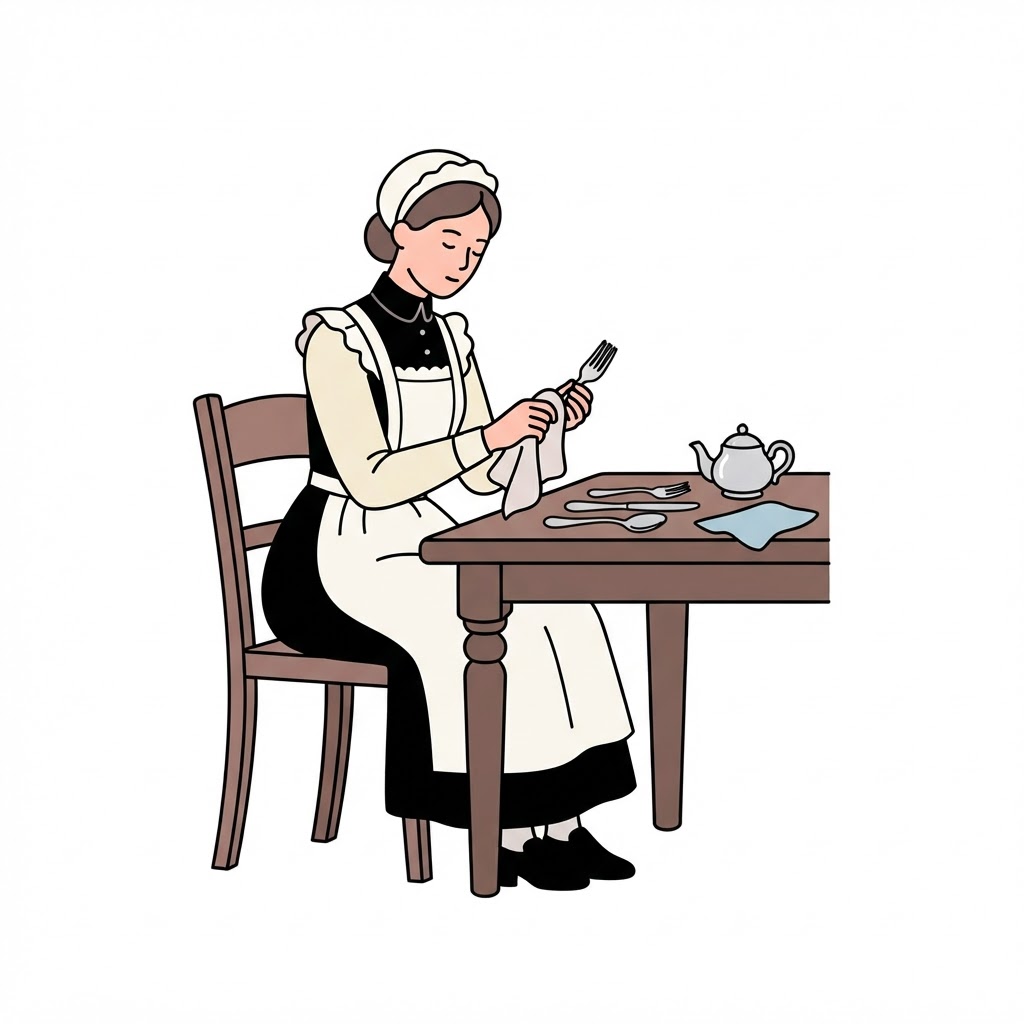
/ˈsɜːrvənt/A person who works in another person's house or for an organization, or someone who is controlled by something else.
Tiếng Việt
người hầu, công chức
SƠ-vừn-t
Nhấn mạnh vào âm 'SƠ', âm 'vừn' đọc nhanh và nhẹ, kết thúc bằng âm 't' bật nhẹ ở cuối lưỡi.
Một người làm việc trong nhà của người khác hoặc cho một tổ chức, hoặc một người bị kiểm soát bởi điều gì đó.
Meanings
7 meanings
1A person who works in another person’s house, performing tasks such as cooking and cleaning.noundaily life
Một người làm việc trong nhà của người khác, thực hiện các công việc như nấu ăn và dọn dẹp.
“She employed a domestic servant to help with the housework.”
“Bà ấy đã thuê một người giúp việc trong nhà để giúp đỡ việc nhà.”
- The duchess arrived, surrounded by her army of servants.
- They went up another set of stairs to the servants' quarters.
- The relationship was one of master and servant.
Trong ngữ cảnh hiện đại, người Việt thường dùng 'người giúp việc' thay vì 'người hầu' để thể hiện sự tôn trọng.
2A person who works for a company, an organization, or the government.nounwork career
Một người làm việc cho một công ty, một tổ chức, hoặc chính phủ.
“He has been a loyal servant to the council for over thirty years.”
“Ông ấy đã là một nhân viên tận tụy của hội đồng trong hơn ba mươi năm.”
- A civil servant is expected to remain politically neutral.
- The Prime Minister described himself as a servant of the people.
- Mr. Bennet said his client was a loyal servant to the organization.
Khi đi với 'civil' hoặc 'public', từ này có nghĩa là 'công chức' hoặc 'viên chức' nhà nước.
3A person or thing that is controlled by something else.noungeneral
Một người hoặc vật bị kiểm soát bởi một điều gì đó khác.
“He was willing to make himself a servant of his art.”
“Anh ấy sẵn sàng biến mình thành nô lệ cho nghệ thuật của mình.”
- Technology should be the servant of education, not its master.
- She became a servant to her own ambition.
Nghĩa này thường mang tính ẩn dụ, dùng trong văn chương để chỉ sự tận hiến hoặc bị lệ thuộc.
4Used as a very formal and old-fashioned way to end a letter.nouncommunication
Được dùng như một cách kết thúc bức thư rất trang trọng và cổ điển.
“I remain, sir, your obedient servant.”
“Tôi xin kính chào ngài, người đầy tớ trung thành của ngài.”
- He signed the letter 'Your humble servant'.
Đây là lối viết thư cổ, ngày nay hầu như không còn sử dụng trong giao tiếp hiện đại.
5A person who dedicates their life or actions to God or a religion.nounsocial
Một người cống hiến cuộc đời hoặc hành động của mình cho Thiên Chúa hoặc một tôn giáo.
“He was known as a faithful servant of the Lord.”
“Ông ấy được biết đến như một tôi tớ trung kiên của Chúa.”
- The monks considered themselves servants of God.
Trong Công giáo, từ 'tôi tớ' thường được dùng để dịch nghĩa này.
6A person of low condition, spirit, or social standing.nounsocial
Một người có địa vị thấp kém, tinh thần bạc nhược hoặc địa vị xã hội thấp.
“He felt like a mere servant in the presence of such royalty.”
“Anh ta cảm thấy mình chỉ như một kẻ hầu cận thấp kém trước sự hiện diện của hoàng gia như vậy.”
Dùng để nhấn mạnh sự chênh lệch lớn về địa vị xã hội.
7To subject or to make someone a servant.verbrare
Bắt ai đó phải phục tùng hoặc biến ai đó thành người hầu.
“The conquered people were servanted to the new empire.”
“Những người dân bị chinh phục đã bị bắt làm nô dịch cho đế quốc mới.”
Dạng động từ của 'servant' rất hiếm khi được sử dụng trong tiếng Anh hiện đại, thường chỉ gặp trong các văn bản cổ.
Word bank
Grammar & forms
Grammar
- countable
- transitive
Inflections
- plural
- servants
- third_person_singular
- servants
- past_simple
- servanted
- past_participle
- servanted
- present_participle
- servanting
Word family
- servileadjective
- servilelyadverb
- servant, service, servitudenoun
- serveverb
Usage patterns
- servant to something
- servant of something
- domestic servant
- civil servant
- servant someone
Avoid mistakes
Common mistakes
The servent cleaned the room.
The servant cleaned the room.
Spelling error: the word ends in '-ant', not '-ent'.
He is a serve in that house.
He is a servant in that house.
'Serve' is a verb; the person is a 'servant'.
I am looking for a servant for my restaurant.
I am looking for a server for my restaurant.
In modern catering, 'server' or 'waiter' is used instead of 'servant'.
The servants's rooms were small.
The servants' rooms were small.
Incorrect possessive plural punctuation.
She is a servant of bank.
She is an employee of the bank.
'Servant' is rarely used for private business employees today; 'employee' is better.
Don't confuse with
- server
a person who serves food in a restaurant, or a computer system
“The server brought our drinks quickly.”
Use 'server' for restaurants and technology; 'servant' is for houses or government.
- slave
a person who is legally owned by another and forced to work
“He worked like a slave in the fields.”
A 'servant' is usually paid or chooses to work; a 'slave' has no freedom.
Academic collocations
Words that pair with "servant" in formal and academic writing
- verb
- employrecruitremain
- adjective
- publiccivildomesticloyal
- noun
- servantmasteremployer
- preposition
- ofto
In context
Real-world examples
- daily life
In historical dramas, we often see the complex relationship between a master and his servant.
Trong các bộ phim cổ trang, chúng ta thường thấy mối quan hệ phức tạp giữa chủ và tớ.
Xã hội Việt Nam xưa cũng có tầng lớp người hầu, kẻ hạ (gia nhân) trong các gia đình quyền quý.
- business
As a civil servant, she is dedicated to serving the community and improving public services.
Với tư cách là một công chức, cô ấy tận tụy phục vụ cộng đồng và cải thiện các dịch vụ công.
Cụm từ 'công chức' (civil servant) rất phổ biến trong hệ thống hành chính Việt Nam.
- academic
The diplomat described himself as a humble servant of the nation.
Nhà ngoại giao tự mô tả mình là một người đầy tớ khiêm nhường của quốc gia.
Chủ tịch Hồ Chí Minh từng sử dụng khái niệm 'đầy tớ của nhân dân' để nói về cán bộ nhà nước.
- daily life
They hired a domestic servant to assist with caring for their elderly parents.
Họ đã thuê một người giúp việc gia đình để hỗ trợ chăm sóc cha mẹ già.
Ngày nay ở Việt Nam, từ 'người giúp việc' được dùng phổ biến hơn thay cho 'người hầu'.
Notes for Vietnamese speakers
- Trong tiếng Việt hiện đại, từ 'người hầu' (servant) mang sắc thái lịch sử hoặc phim ảnh. Trong đời sống hàng ngày, người Việt dùng 'người giúp việc' để tránh sự phân biệt giai cấp.
- Khái niệm 'civil servant' tương đương với 'công chức' hoặc 'viên chức' trong hệ thống nhà nước Việt Nam, mang hàm ý phục vụ nhân dân.
- Lưu ý phân biệt 'servant' với 'waiter' (người phục vụ nhà hàng), tránh dùng 'servant' trong môi trường dịch vụ hiện đại vì có thể bị coi là xúc phạm.
Etymology
Etymology: Late Middle English from Old French, present participle of servir 'to serve', from Latin servire. Originally denoted a person in the personal service of another (Source: Oxford Dictionary of English Etymology).
Exam levels
CEFR
B1
TOEIC
505-600
More in Vietnamese
- Từ điển Lạc Việt (Laban Dictionary)
Cung cấp định nghĩa chi tiết và các cụm từ thông dụng của 'servant' trong tiếng Việt.
- TFlat Dictionary (Soha)
Từ điển tra cứu nhanh với nhiều ví dụ minh họa và từ đồng nghĩa.