dig
/dɪɡ/To break up and move earth with a tool or hands, or to push/search for something; also refers to an archaeological site or a critical remark.
Tiếng Việt
đào
đích
Phát âm giống từ 'đích' trong tiếng Việt nhưng kết thúc bằng âm 'g' nhẹ ở cuối họng.
Đào bới đất bằng dụng cụ hoặc tay, tìm kiếm thứ gì đó; cũng có nghĩa là một địa điểm khảo cổ hoặc một lời chỉ trích.
Meanings
11 meanings
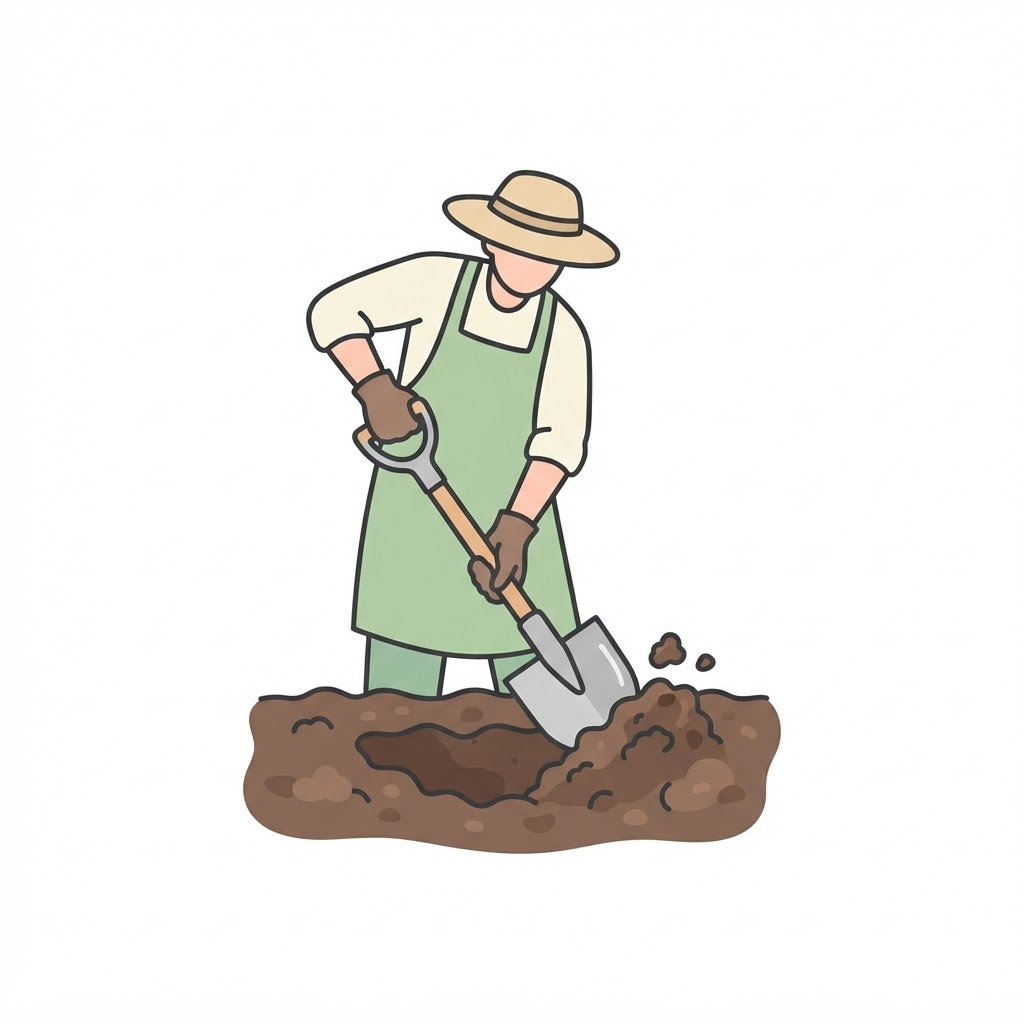
1To make a hole in the ground or move soil using hands, a tool, or a machine.verbdaily life
Đào lỗ trên mặt đất hoặc di chuyển đất bằng tay, dụng cụ hoặc máy móc.
“I think I'll do some digging in the garden.”
“Tôi nghĩ tôi sẽ ra vườn đào xới một chút.”
- They were digging for buried treasure.
- We'll have to dig deep to get at the roots.
- a freshly dug grave
Đây là nghĩa phổ biến nhất. Lưu ý động từ này là bất quy tắc: dig - dug - dug.
2To remove something from the ground by breaking the earth around it.verbfood
Lấy thứ gì đó ra khỏi mặt đất bằng cách đào bới lớp đất xung quanh.
“I'll dig some potatoes for lunch.”
“Tôi sẽ đi đào ít khoai tây cho bữa trưa.”
- I was planning to go out and dig up some hibiscus plants.
Thường dùng với các loại củ (khoai tây, cà rốt) hoặc cây cối.
3To search through something in order to find an object.verbdaily life
Lục lọi, tìm kiếm thứ gì đó bên trong một vật chứa.
“I dug around in my bag for a pen.”
“Tôi lục lọi trong túi để tìm cây bút.”
- He dug his hand into his pocket, searching for a quarter.
Thường đi kèm với giới từ 'around' hoặc 'into' để chỉ hành động lục lọi một không gian hẹp.
4To search for information in a careful and detailed way.verbacademic
Tìm tòi, nghiên cứu thông tin một cách kỹ lưỡng và chi tiết.
“You'll need to dig deep into the records to find the figures you want.”
“Bạn sẽ cần đào sâu vào hồ sơ để tìm những số liệu bạn muốn.”
- They hired private investigators to dig up dirt on their political opponents.
Cụm từ 'dig deep' rất phổ biến trong học thuật và kinh doanh khi nói về việc nghiên cứu sâu.
5To push a finger or elbow into someone's side, often to get their attention.verbsocial interaction
Huých ngón tay hoặc khuỷu tay vào sườn ai đó, thường để gây sự chú ý.
“He dug an elbow into my ribs and guffawed.”
“Anh ta huých khuỷu tay vào sườn tôi rồi cười hô hố.”
Hành động này thường mang tính thân mật hoặc trêu chọc giữa những người quen biết.
6To approve of or like something very much.verbslang
Thích hoặc tán thưởng điều gì đó rất nhiều.
“I really dig your new haircut!”
“Tôi cực kỳ thích kiểu tóc mới của bạn đấy!”
Đây là từ lóng cũ (old-fashioned slang), chủ yếu được dùng trong văn hóa đại chúng thế kỷ 20.
7In volleyball, to defend against an attack by successfully passing the ball.verbsports
Trong bóng chuyền: cứu bóng, phòng thủ thành công một cú đập bóng của đối phương.
“The libero managed to dig a powerful spike from the opponent.”
“Cầu thủ tự do (libero) đã xoay xở cứu được một cú đập bóng mạnh từ đối phương.”
Thuật ngữ chuyên môn trong thể thao, đặc biệt là bóng chuyền.
8A sharp push with your finger or elbow.nouncommunication
Một cú huých mạnh bằng ngón tay hoặc khuỷu tay.
“She gave him a sharp dig in the ribs to make him be quiet.”
“Cô ấy huých mạnh vào sườn anh ta để bảo anh ta im lặng.”
Cấu trúc 'give someone a dig' thường dùng cho hành động này.
9A remark that is intended to annoy, criticize, or upset someone.nounsocial interaction
Một lời nói bóng gió, mỉa mai hoặc chỉ trích nhằm làm ai đó khó chịu.
“He kept making sly little digs at my expensive clothes.”
“Hắn cứ liên tục đưa ra những lời mỉa mai ngầm về bộ quần áo đắt tiền của tôi.”
- I resisted the temptation to get in a sly dig at Fred.
Thường đi với tính từ 'sly' (ngầm, kín đáo) để chỉ những lời mỉa mai không trực diện.
10An organized activity where people dig in the ground to discover historical buildings or objects.nounarts culture
Một cuộc khai quật khảo cổ có tổ chức.
“The archaeological dig revealed the site of a Roman villa.”
“Cuộc khai quật khảo cổ đã hé lộ vị trí của một biệt thự La Mã.”
- I went on a dig over the summer in Egypt.
Thường đi kèm với tính từ 'archaeological'.
11In volleyball, a defensive pass of a ball that has been attacked by the opposing team.nounsports
Trong bóng chuyền: một pha cứu bóng hoặc đường chuyền phòng thủ sau cú đập của đối thủ.
“That was an incredible dig to save the point!”
“Đó quả là một pha cứu bóng không tưởng để giữ lại điểm số!”
Dùng như một danh từ để đếm số lần cứu bóng thành công.
Word bank
Grammar & forms
Grammar
- transitive
- intransitive
- countable
Inflections
- third_person_singular
- digs
- past_simple
- dug
- past_participle
- dug
- present_participle
- digging
- plural
- digs
Word family
- digger, diggingnoun
Usage patterns
- dig for something
- dig in the ground
- dig something up
- dig into something
- dig someone in the ribs
- a dig in the ribs
- a dig at someone
- go on a dig
Avoid mistakes
Common mistakes
He digged a hole.
He dug a hole.
'Dig' is an irregular verb; the past tense is 'dug'.
She is diging in the garden.
She is digging in the garden.
Double the 'g' when adding '-ing' to words ending in a short vowel and a single consonant.
I dig to my bag for my keys.
I dug into my bag for my keys.
Use 'into' or 'around in' when searching inside a container.
He made a dig about my work.
He had/made a dig at my work.
The preposition 'at' is typically used after 'a dig' when it means a criticism.
We must dig the truth.
We must dig for the truth.
When searching for abstract information, use 'dig for' or 'dig up'.
Academic collocations
Words that pair with "dig" in formal and academic writing
- verb
- dig deeperinvestigatereveal
- adjective
- archaeologicalpreliminarydetailed
- noun
- researchevidencesite
- preposition
- intofor
In context
Real-world examples
- daily life
We need to dig a hole to plant this mango tree.
Chúng ta cần đào một cái hố để trồng cây xoài này.
Việc trồng cây ăn quả trong vườn nhà là hình ảnh rất quen thuộc trong đời sống nông thôn và ngoại ô Việt Nam.
- business
The journalists started to dig into the company's financial records.
Các phóng viên bắt đầu đào sâu vào hồ sơ tài chính của công ty.
Sử dụng nghĩa bóng 'đào sâu' (dig into) rất phổ biến trong báo chí điều tra tại Việt Nam.
- social interaction
He took a sly dig at his colleague during the meeting.
Anh ta đã đưa ra một lời mỉa mai ngầm đối với đồng nghiệp trong cuộc họp.
Văn hóa giao tiếp công sở đôi khi có những lời nói bóng gió, mỉa mai nhẹ nhàng (sly dig) thay vì chỉ trích trực diện.
- academic
Archaeologists are conducting a major dig in Central Vietnam.
Các nhà khảo cổ đang tiến hành một cuộc khai quật lớn tại Miền Trung Việt Nam.
Việt Nam có nhiều địa điểm khảo cổ quan trọng như Hoàng thành Thăng Long hay các di tích văn hóa Chăm.
Notes for Vietnamese speakers
- Trong tiếng Việt, 'đào' thường đi kèm với các động từ bổ trợ như 'đào bới', 'đào xới'.
- Thành ngữ 'đào sâu chôn chặt' trong tiếng Việt có nghĩa là giữ kín bí mật, khác với 'dig deep' trong tiếng Anh thường mang nghĩa nghiên cứu kỹ lưỡng.
- Từ 'dig' dùng làm lóng (slang) mang nghĩa 'thích' hiện nay ít phổ biến hơn với thế hệ trẻ Việt Nam so với các từ như 'fancy' hay 'into'.
Etymology
Origin: Middle English 'diggen', probably from Old French 'diguer' (to dig). It replaced the Old English word 'dician', which came from 'dic' (ditch). The usage for 'liking' something emerged in 20th-century African American Vernacular English. Source: Oxford Dictionary of English Etymology.
Exam levels
IELTS
6.0
CEFR
B2
TOEIC
705-800
More in Vietnamese
- Từ điển Lạc Việt (Laban Dictionary)
Tra cứu nghĩa chi tiết và các cụm từ thông dụng của 'dig'.
- TFlat Dictionary (Soha)
Cung cấp nhiều ví dụ song ngữ và các từ liên quan.