afraid
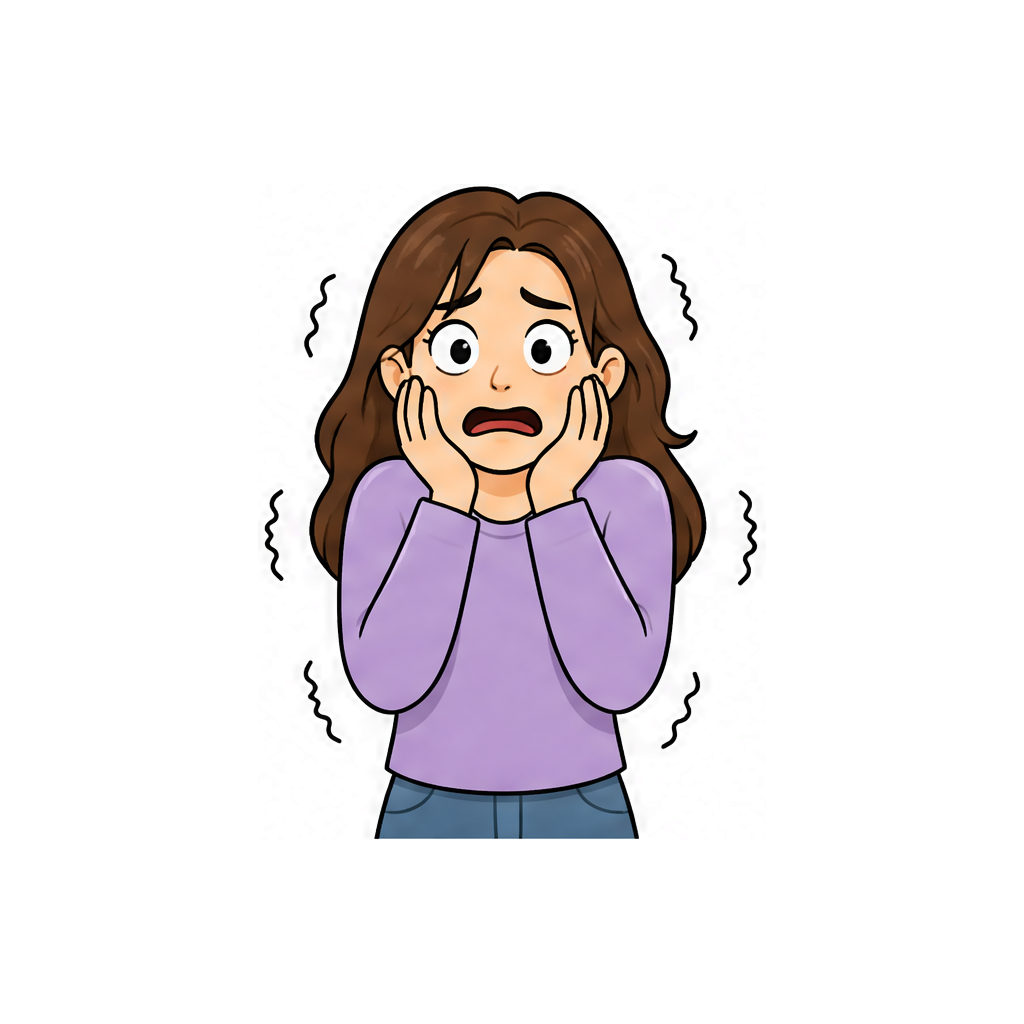
/əˈfreɪd/Feeling fear, worry, or anxiety about something dangerous, painful, or unknown; also used to politely express regret.
Tiếng Việt
lo sợ
ờ-FRÊID
Nhấn mạnh vào âm tiết thứ hai 'FRÊID'. Âm 'd' ở cuối phát âm nhẹ.
Cảm thấy sợ hãi, lo lắng về điều gì đó nguy hiểm, đau đớn hoặc không xác định; cũng được dùng để bày tỏ sự tiếc nuối một cách lịch sự.
Meanings
4 meanings
1Feeling fear; frightened because you think that you might be hurt or suffer.emotions
Cảm thấy sợ hãi; hoảng sợ vì bạn nghĩ rằng mình có thể bị thương hoặc phải chịu đựng điều gì đó.
“Don't be afraid.”
“Đừng sợ.”
- What has made you so deeply afraid of your boss?
- Are you afraid of the dark?
- I'm not afraid of you!
- She was afraid, but never thought of quitting.
Dùng để diễn tả nỗi sợ hãi trực tiếp. Lưu ý 'afraid' không đứng trước danh từ (không nói 'an afraid child').
2Worried about what might happen or the possible results of a particular situation.emotions
Lo lắng về những gì có thể xảy ra hoặc kết quả có thể có của một tình huống cụ thể.
“She was afraid of upsetting her parents.”
“Cô ấy sợ làm bố mẹ buồn.”
- He stopped abruptly, suddenly afraid to say the words out loud.
- She was tense, almost afraid to open the letter.
- You do know, don't you? You are just afraid to tell me.
- Aren't you afraid that you'll fall?
Khi nói về việc lo lắng làm phiền ai đó hoặc kết quả không hay, dùng 'afraid of + V-ing'.
3Worried or frightened that something unpleasant or dangerous will happen to a particular person or thing.emotions
Lo lắng hoặc sợ hãi rằng điều gì đó khó chịu hoặc nguy hiểm sẽ xảy ra với một người hoặc vật cụ thể.
“I'm not afraid for me, but for the baby.”
“Tôi không sợ cho mình, mà là cho đứa bé.”
- We were afraid for our lives during the storm.
- He is afraid for the future of the company.
Dùng giới từ 'for' khi nỗi sợ hướng về sự an nguy của người khác.
4Used as a polite way of telling somebody something that is unpleasant or disappointing, or that you are sorry about.communication
Dùng như một cách lịch sự để nói với ai đó điều gì đó khó chịu hoặc gây thất vọng, hoặc để xin lỗi.
“I can't help you, I'm afraid.”
“Tôi e là tôi không thể giúp bạn được.”
- I'm afraid I have bad news.
- Is there any tea left? ~ I'm afraid not.
- A lot of those stores will cheat you, I’m afraid.
Trong tiếng Việt thường dịch là 'e là' hoặc 'rất tiếc là'. Đây là cách dùng rất phổ biến trong giao tiếp trang trọng.
Word bank
Common phrases
- be afraid
- feel afraid
- look afraid
- extremely afraid
- rather afraid
- very afraid
- afraid of
- afraid for
- nothing to be afraid of
Grammar & forms
Avoid mistakes
Common mistakes
She is afraid from dogs.
She is afraid of dogs.
Use the preposition 'of' after 'afraid', not 'from'.
I am afraid to the dark.
I am afraid of the dark.
Use 'afraid of' + noun. Use 'afraid to' + verb.
It is an afraid dog.
It is a frightened dog.
'Afraid' is a predicative adjective and is rarely used before a noun (attributively). Use 'frightened' or 'scared' instead.
I afraid of heights.
I am afraid of heights.
You must use the verb 'to be' with afraid (I am, she is, they are).
She is afraid to hurting him.
She is afraid of hurting him.
Use 'afraid of' + -ing form, or 'afraid to' + infinitive. 'Afraid to hurting' mixes both.
Don't confuse with
- scared
feeling fear
“I'm scared of spiders.”
'Scared' is more common in informal speech; 'afraid' is slightly more formal and often used for polite apologies.
Academic collocations
Words that pair with "afraid" in formal and academic writing
- verb
- seemappearremain
- preposition
- oftofor
In context
Real-world examples
- business
Many people are afraid of losing their jobs during the economic downturn.
Nhiều người lo sợ sẽ mất việc làm trong thời kỳ suy thoái kinh tế.
Sự ổn định công việc là mối quan tâm lớn trong văn hóa coi trọng sự bền vững của người Việt.
- daily life
I'm afraid I can't come to your wedding because I'll be away on business.
Tôi e là mình không thể đến dự đám cưới của bạn vì phải đi công tác.
Sử dụng 'I'm afraid' là cách từ chối khéo léo, giữ thể diện (face-saving) rất quan trọng trong giao tiếp của người Việt.
- academic
Students are often afraid of failing the national entrance exam.
Học sinh thường lo sợ bị trượt kỳ thi tuyển sinh quốc gia.
Áp lực học tập và các kỳ thi lớn là một phần đặc trưng trong hệ thống giáo dục Việt Nam.
Notes for Vietnamese speakers
- Trong tiếng Việt, 'afraid' có thể dịch là 'sợ' (nỗi sợ bản năng) hoặc 'e là' (lịch sự).
- Người Việt thường dùng 'e là' hoặc 'tiếc là' để thay thế cho 'I'm afraid' khi muốn từ chối một lời mời để tránh gây mất lòng.
- Bạn hay nhầm 'be afraid of' với động từ 'fear', nên hãy nhớ 'afraid' luôn đi kèm động từ 'to be'.
Etymology
Middle English: from Old French effrei (noun), effreier (verb), based on Latin ex- 'out' + Germanic frithu 'peace'. Originally the past participle of the verb affray, meaning 'startled' or 'disturbed'.
Exam levels
IELTS
4.0
CEFR
A1
TOEIC
0-250
More in Vietnamese
- TFlat Dictionary (Soha)
Cung cấp nhiều ví dụ và các cụm từ liên quan.
- Cambridge English–Vietnamese Dictionary
Nghĩa tiếng Việt kèm ví dụ từ Cambridge Dictionary.
- VDict (Anh–Việt)
Từ điển Anh–Việt với ví dụ song ngữ.