gender
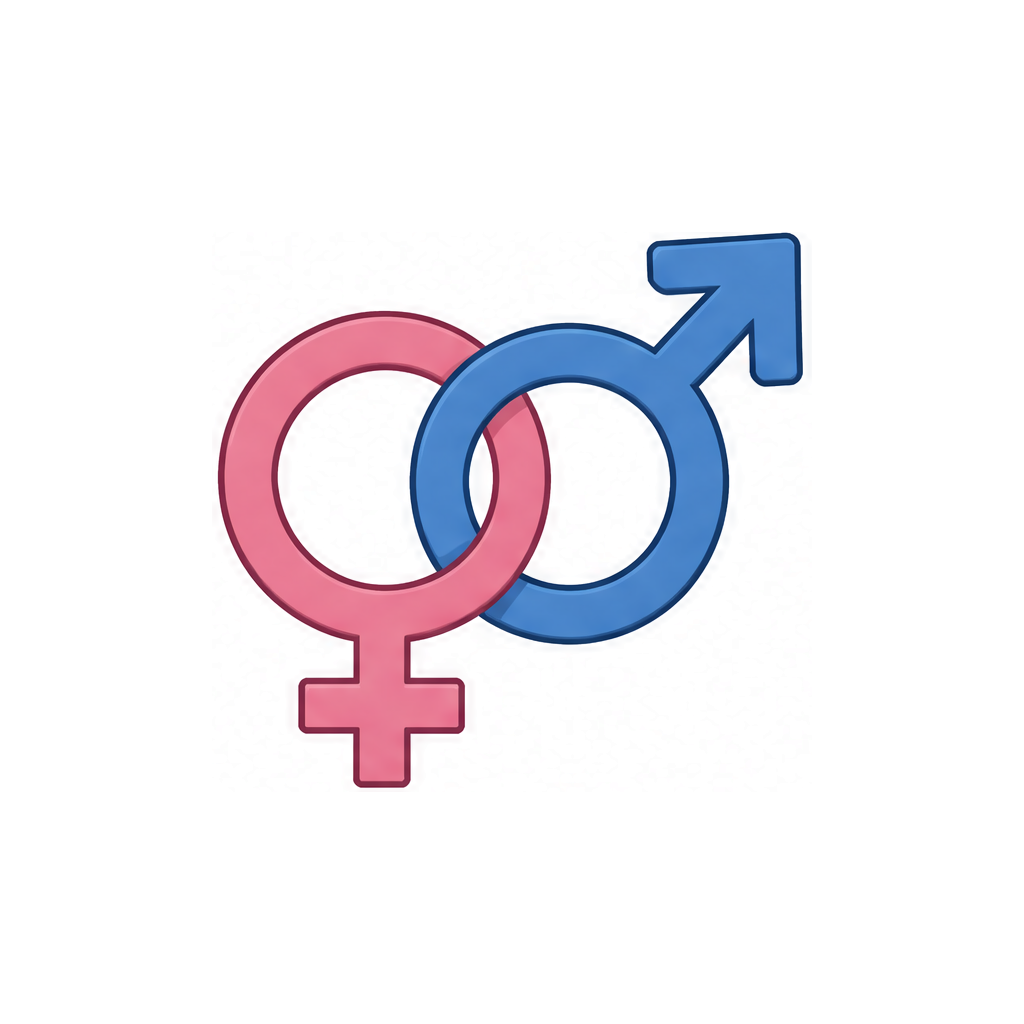
/ˈdʒendər/The fact of being male or female, especially regarding social and cultural identity, or a grammatical category for words.
Tiếng Việt
giới tính
GIEN-đờ
Âm 'g' phát âm giống 'j' trong tiếng Anh (chữ 'gi' tiếng Việt nhưng mạnh hơn), nhấn mạnh âm tiết đầu 'GIEN', âm 'đờ' đọc nhẹ.
Trạng thái nam hoặc nữ, đặc biệt liên quan đến bản dạng xã hội và văn hóa, hoặc một phạm trù ngữ pháp của từ loại.
Meanings
6 meanings
1The fact of being male or female, especially when considered with reference to social and cultural differences rather than biology; members of a particular gender as a group.nounsocial
Giới tính (về mặt xã hội), bản dạng giới; các thành viên của một giới tính cụ thể khi xét trong nhóm.
“The government is trying to address issues of class, race, and gender in the workplace.”
“Chính phủ đang cố gắng giải quyết các vấn đề về giai cấp, chủng tộc và giới tính tại nơi làm việc.”
- Discrimination on the basis of gender is prohibited by law.
- Traditional gender roles have changed significantly in the last 50 years.
- The study looks at gender differences in school performance.
Trong tiếng Việt, 'gender' thường được dịch là 'giới' để phân biệt với 'sex' (giới tính sinh học). Người học nên chú ý sử dụng 'giới' trong các văn bản học thuật hoặc xã hội học.
2A grammatical category used in some languages to divide nouns, pronouns, and adjectives into classes such as masculine, feminine, and neuter.nouneducation
Giống (trong ngữ pháp), một phạm trù dùng để phân loại danh từ, đại từ và tính từ thành các loại như giống đực, giống cái và giống trung.
“In French, the adjective must agree with the noun in number and gender.”
“Trong tiếng Pháp, tính từ phải hòa hợp với danh từ về số lượng và giống.”
- English does not have grammatical gender for most nouns.
- Students often struggle with the complex system of gender in German nouns.
- Some languages have an animate/inanimate gender distinction.
Tiếng Việt không có phạm trù 'giống' trong ngữ pháp, vì vậy khi học các ngôn ngữ như tiếng Pháp hay tiếng Đức, khái niệm 'gender' này ám chỉ việc phân loại từ vựng thành đực/cái/trung.
3The condition of being male or female as a biological category (often used synonymously with 'sex' in general contexts).noungeneral
Giới tính sinh học (thường được dùng thay thế cho 'sex' trong các ngữ cảnh thông thường).
“Polls show that gender alone may no longer be a stumbling block for voters.”
“Các cuộc thăm dò cho thấy chỉ riêng yếu tố giới tính có lẽ không còn là rào cản đối với cử tri.”
- The application form asks for your name, age, and gender.
- Gender-neutral bathrooms are becoming more common in public buildings.
Dù 'gender' và 'sex' thường dùng thay thế nhau trong đời sống, nhưng trong các đơn từ (form) chính thức, người Việt thường thấy 'Giới tính' đại diện cho cả hai.
4The quality that distinguishes electrical or mechanical connectors, which may be male (fitting into another) or female (receiving the other).nountechnology
Đầu nối (đực/cái) trong kỹ thuật điện hoặc cơ khí.
“Check the gender of the cable connector before buying the adapter.”
“Hãy kiểm tra loại đầu nối của cáp (đực hay cái) trước khi mua bộ chuyển đổi.”
- A gender changer is used to convert a male plug into a female socket.
- The standard serial port on a PC usually has male gender.
Trong kỹ thuật tại Việt Nam, người ta cũng dùng thuật ngữ 'giắc đực' (male) và 'giắc cái' (female) tương ứng với định nghĩa này.
5To assign a gender to someone or something, or to perceive something as belonging to a particular gender.verbsocial
Gán giới tính cho ai đó hoặc vật gì đó, hoặc nhìn nhận điều gì đó thuộc về một giới tính cụ thể.
“Children don't usually gender their toys until they see adults doing it.”
“Trẻ em thường không gán giới tính cho đồ chơi của mình cho đến khi chúng thấy người lớn làm vậy.”
- I do not see why we need to gender babies' clothes.
- Increasing numbers of young people are choosing to gender themselves in non-traditional ways.
- Sociology explores how society genders certain professions like nursing or engineering.
Đây là cách dùng mang tính học thuật cao (sociology). Trong tiếng Việt, ta thường dịch là 'gán mác giới tính' hoặc 'định giới'.
6Evoking positive feelings regarding gender identity, such as gender euphoria or gender envy.adjectiveslang
Mang lại cảm giác tích cực về bản dạng giới (tiếng lóng).
“That outfit is so gender.”
“Bộ đồ đó trông rất hợp với phong cách giới tính luôn (cách nói lóng).”
Đây là cách dùng mới trong cộng đồng Gen Z và LGBTQ+, chưa phổ biến trong tiếng Việt chuẩn nên cần cẩn thận khi sử dụng.
Word bank
Grammar & forms
Grammar
- countable
- uncountable
- transitive
Inflections
- plural
- genders
- third_person_singular
- genders
- past_simple
- gendered
- past_participle
- gendered
- present_participle
- gendering
Word family
- gendered, genderless, transgenderadjective
- genderlyadverb
- gender, transgenderismnoun
- engender, genderverb
Usage patterns
- gender roles
- gender identity
- gender equality
- gender something
- gender somebody
Avoid mistakes
Common mistakes
The French gender of 'table' is female.
The grammatical gender of 'table' in French is feminine.
In linguistics, use 'masculine' and 'feminine' rather than 'male' and 'female'.
What is your gender? (on a medical form)
What is your sex?
Medical forms typically ask for biological 'sex' for physiological data.
Gender equality between man and woman.
Gender equality between men and women.
Use plural nouns when referring to general groups in this context.
He is a different gender from I.
He is a different gender than me.
While 'from' is possible, 'than me' or 'from mine' is more common in modern usage regarding identity.
Gender issues are very important today.
Gender issues are very important today.
Note that 'gender' is often used as a noun adjunct (like an adjective) before other nouns.
Don't confuse with
- sex
The biological classification as male or female based on reproductive organs.
“The doctor recorded the baby's sex as female.”
Use 'sex' for biology and 'gender' for social/cultural identity or grammar.
- genre
A style or category of art, music, or literature.
“My favorite film genre is science fiction.”
Though related in origin, 'genre' is only for arts/media, while 'gender' is for people/grammar.
Academic collocations
Words that pair with "gender" in formal and academic writing
- verb
- constructperformassigndetermine
- adjective
- grammaticalbinaryfluidtraditional
- noun
- identityequalitysocializationnorm
- preposition
- ofonacross
In context
Real-world examples
- business
The company is committed to promoting gender equality in management positions.
Công ty cam kết thúc đẩy bình đẳng giới trong các vị trí quản lý.
Tại Việt Nam, vấn đề bình đẳng giới tại nơi làm việc đang ngày càng được chú trọng, đặc biệt là việc tăng tỷ lệ phụ nữ lãnh đạo.
- daily life
Traditional gender roles still influence family dynamics in many rural areas.
Các vai trò giới truyền thống vẫn ảnh hưởng đến động lực gia đình ở nhiều vùng nông thôn.
Văn hóa Việt Nam truyền thống thường gán cho phụ nữ vai trò nội trợ và nam giới là trụ cột, dù điều này đang thay đổi nhanh chóng ở thành thị.
- academic
Many languages, like Spanish and German, have complex grammatical gender systems.
Nhiều ngôn ngữ, như tiếng Tây Ban Nha và tiếng Đức, có hệ thống giống ngữ pháp phức tạp.
Người Việt học ngoại ngữ thường gặp khó khăn với khái niệm này vì tiếng Việt không có giống ngữ pháp.
- education
The teacher encouraged students to avoid gender stereotypes when choosing their future careers.
Giáo viên khuyến khích học sinh tránh những định kiến giới khi lựa chọn nghề nghiệp tương lai.
Trong giáo dục hiện đại tại Việt Nam, việc phá bỏ định kiến giới trong nghề nghiệp (như nam làm điều dưỡng, nữ làm kỹ sư) đang được đẩy mạnh.
Notes for Vietnamese speakers
- Trong tiếng Việt, 'giới tính' thường được dùng chung cho cả 'sex' và 'gender'. Tuy nhiên, trong các nghiên cứu xã hội học tại Việt Nam, 'giới' được dùng để chỉ các khía cạnh xã hội, còn 'giới tính' chỉ khía cạnh sinh học.
- Khái niệm 'gender identity' (bản dạng giới) đang dần trở nên phổ biến hơn trong giới trẻ Việt Nam, mặc dù các thế hệ trước có thể vẫn còn xa lạ với thuật ngữ này.
- Việt Nam có Luật Bình đẳng giới (Gender Equality Law), phản ánh nỗ lực của quốc gia trong việc thu hẹp khoảng cách giới.
Etymology
Middle English (in the sense ‘kind, sort, genus’): from Old French gendre (modern genre), based on Latin genus ‘birth, family, nation’. The grammatical sense was the earliest in English; the social sense developed in the 20th century. Source: Oxford Dictionary of English Etymology.
Exam levels
IELTS
6.5
CEFR
B2
TOEIC
705-800
More in Vietnamese
- TFlat Dictionary (Soha)
Cung cấp nghĩa chi tiết và các cụm từ liên quan đến 'gender'.
- Cambridge English–Vietnamese Dictionary
Nghĩa tiếng Việt kèm ví dụ từ Cambridge Dictionary.
- VDict (Anh–Việt)
Từ điển Anh–Việt với ví dụ song ngữ.