blade
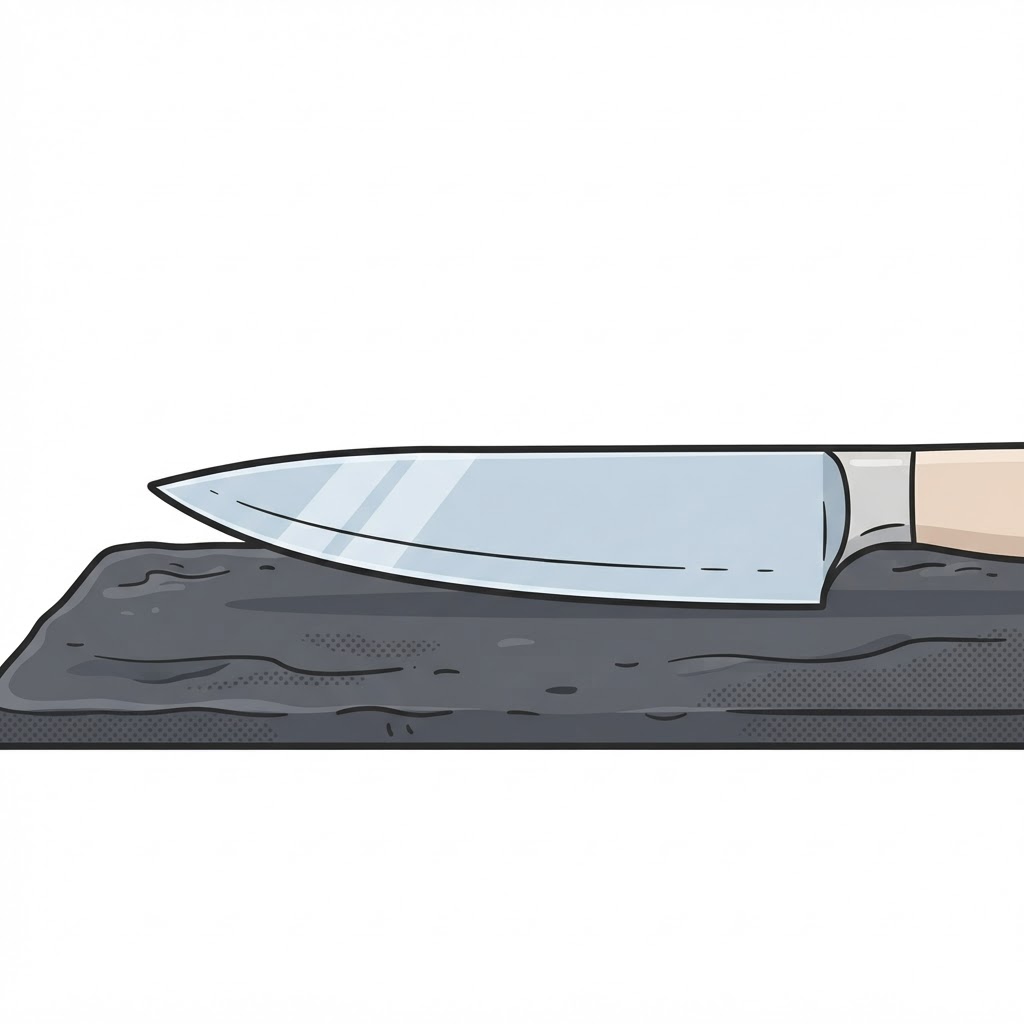
/bleɪd/The flat, sharp part of a knife or tool; a single leaf of grass; or a rotating part of a propeller or fan.
Tiếng Việt
lưỡi, lá (cỏ), cánh (quạt)
blây-đờ
Phát âm giống 'blây' trong tiếng Việt, kết thúc bằng âm 'd' nhẹ ở đầu lưỡi.
Phần phẳng, sắc của dao hoặc dụng cụ; một lá cỏ đơn lẻ; hoặc bộ phận xoay của chân vịt hoặc quạt.
Meanings
11 meanings
1The flat part of a knife, tool, or weapon, which has a sharp edge or edges for cutting.noun
Phần phẳng của dao, dụng cụ hoặc vũ khí, có một hoặc nhiều cạnh sắc để cắt.
“The machine comes with a plastic guard over the blade to protect the operator.”
“Máy có nắp bảo vệ bằng nhựa phía trên lưỡi dao để bảo vệ người vận hành.”
- Knife blades are generally made of stainless steel.
- The prisoner used a hacksaw blade to cut through the bars.
- He swung the blade with all his strength.
Dùng 'lưỡi' khi nói về dụng cụ cắt. Lưu ý phân biệt với 'handle' (cán/tay cầm).
2One of the flat parts that turn around in an engine, on a fan, or on a helicopter.noun
Một trong những bộ phận phẳng xoay quanh động cơ, quạt hoặc máy bay trực thăng.
“The blades of the propeller began to spin rapidly.”
“Các cánh của chân vịt bắt đầu quay nhanh chóng.”
- Wind turbine blades can be over 50 meters long.
- A stone had damaged one of the fan blades.
Trong ngữ cảnh máy móc, 'blade' thường được dịch là 'cánh' (cánh quạt, cánh tuabin).
3A single flat leaf of grass.noun
Một lá cỏ phẳng đơn lẻ.
“Not a single blade of grass stirred in the stagnant air.”
“Không một lá cỏ nào lay động trong bầu không khí tù đọng.”
- The boy made a whistle from a blade of grass.
- Fresh blades of grass were poking through the melting snow.
Vì 'grass' là danh từ không đếm được, ta phải dùng cụm 'a blade of grass' để chỉ một lá cỏ duy nhất.
4The flat metal part on the bottom of an ice skate that allows it to glide on ice.nounsports
Phần kim loại phẳng dưới đáy giày trượt băng giúp nó lướt trên băng.
“He sharpened the blades of his skates before the big game.”
“Anh ấy đã mài lưỡi giày trượt của mình trước trận đấu lớn.”
Ở Việt Nam ít trượt băng tự nhiên nhưng thuật ngữ này dùng trong các sân trượt băng nhân tạo tại các trung tâm thương mại.
5The flat, wide part of an oar or paddle that is pushed through the water.nounsports
Phần phẳng, rộng của mái chèo được đẩy qua nước.
“Keep the blade of the oar vertical as it enters the water.”
“Giữ cho bản mái chèo thẳng đứng khi nó chạm nước.”
Thường gọi là 'bản mái chèo' hoặc 'lưỡi chèo' trong kỹ thuật chèo thuyền.
6The flat bone in the upper back; the scapula.nounhealth
Xương phẳng ở phần lưng trên; xương bả vai.
“He felt a sharp pain just below his left shoulder blade.”
“Anh cảm thấy đau nhói ngay dưới xương bả vai trái.”
Cụm từ thông dụng nhất là 'shoulder blade'.
7A dashing or energetic young man.nounsocial
Một chàng trai trẻ hào hoa hoặc năng động.
“He was quite the young blade in his university days.”
“Anh ấy từng là một chàng thanh niên hào hoa trong những ngày còn ở đại học.”
Nghĩa này khá cổ (old-fashioned), ít gặp trong giao tiếp hiện đại nhưng có trong văn học.
8The part of the tongue just behind the tip, used in speech to produce certain sounds.nounacademic
Phần lưỡi ngay sau đầu lưỡi, được dùng trong phát âm để tạo ra một số âm nhất định.
“Laminal consonants are produced using the blade of the tongue.”
“Các phụ âm phiến lưỡi được phát âm bằng cách sử dụng mặt lưỡi.”
Thuật ngữ chuyên ngành ngữ âm học, thường gọi là 'mặt lưỡi' hoặc 'phiến lưỡi'.
9To skate using rollerblades (inline skates).verbsports
Trượt patin bằng giày có bánh xe dọc (inline skates).
“We spent the afternoon blading along the beach boardwalk.”
“Chúng tôi đã dành cả buổi chiều trượt patin dọc theo lối đi bộ ven biển.”
Người Việt thường dùng 'đi trượt patin' thay vì dịch sát nghĩa từ 'blading'.
10To stab someone with a knife or similar sharp object.verbdaily life
Đâm ai đó bằng dao hoặc vật sắc nhọn tương tự.
“The rival gang member got bladed in the alleyway.”
“Thành viên băng đảng đối địch đã bị đâm trong con hẻm.”
Đây là từ lóng (slang), nên cẩn trọng khi sử dụng.
11In professional wrestling, to intentionally cut oneself to cause bleeding for dramatic effect.verbarts culture
Trong vật chuyên nghiệp, hành động tự cắt mình một cách cố ý để gây chảy máu nhằm tạo hiệu ứng kịch tính.
“The wrestler bladed his forehead after the chair shot.”
“Đô vật đã tự làm rách trán sau cú đánh bằng ghế.”
Thuật ngữ chuyên biệt trong giới đô vật biểu diễn.
Word bank
Grammar & forms
Grammar
- countable
- intransitive
- transitive
Inflections
- plural
- blades
- third_person_singular
- blades
- past_simple
- bladed
- past_participle
- bladed
- present_participle
- blading
Word family
- bladedadjective
Usage patterns
- blade of something
- razor blade
- shoulder blade
- go blading
Avoid mistakes
Common mistakes
I saw a grass in the yard.
I saw a blade of grass in the yard.
Grass is uncountable; use 'a blade of' to refer to a single piece.
Be careful with the knife's handle edge.
Be careful with the knife's blade.
The sharp part is the blade, not the handle.
He hurt his shoulder bone.
He hurt his shoulder blade.
While it is a bone, 'shoulder blade' is the common idiomatic term for the scapula.
The fan has four wings.
The fan has four blades.
In technical English, fans and propellers have blades, not wings.
I am going to blade today.
I am going blading today.
When using 'blade' as a verb for skating, the 'go -ing' form is the standard informal usage.
Don't confuse with
Academic collocations
Words that pair with "blade" in formal and academic writing
- verb
- rotatesharpenreplace
- adjective
- sharpmetallicrotating
- noun
- bladeangleassembly
- preposition
- ofon
In context
Real-world examples
- daily life
Be careful, the razor blade is extremely sharp.
Cẩn thận nhé, lưỡi dao lam cực kỳ sắc bén.
Dao lam (razor blade) là vật dụng rất phổ biến trong đời sống hàng ngày tại Việt Nam, từ việc cạo râu đến các việc thủ công.
- business
The technician is checking the turbine blades of the hydroelectric plant.
Kỹ thuật viên đang kiểm tra các cánh tuabin của nhà máy thủy điện.
Thủy điện là nguồn năng lượng quan trọng tại Việt Nam, thuật ngữ 'cánh tuabin' thường xuyên xuất hiện trong ngành kỹ thuật.
- academic
In his poetry, he described each blade of grass as a soul.
Trong thơ ông, ông miêu tả mỗi lá cỏ như một linh hồn.
Hình ảnh 'lá cỏ' (blade of grass) thường xuyên xuất hiện trong văn học và thơ ca Việt Nam để chỉ sự nhỏ bé nhưng kiên cường.
- health
He suffered a fracture in his right shoulder blade after the fall.
Anh ấy bị gãy xương bả vai phải sau cú ngã.
Người Việt thường dùng từ 'xương bả vai' thay vì 'scapula' trong giao tiếp thông thường về sức khỏe.
- sports
The kids love to go blading in the park on weekends.
Lũ trẻ rất thích đi trượt patin trong công viên vào cuối tuần.
Trượt patin (rollerblading) là hoạt động giải trí phổ biến của thanh thiếu niên tại các thành phố lớn như Hà Nội và TP.HCM.
Notes for Vietnamese speakers
- Trong tiếng Việt, 'blade' có nhiều từ dịch tương ứng tùy ngữ cảnh: 'lưỡi' cho dao/kiếm, 'cánh' cho quạt/máy bay, 'lá' cho cỏ, và 'xương bả' cho giải phẫu người.
- Từ 'lưỡi dao' thường được dùng trong các thành ngữ Việt Nam để chỉ sự nguy hiểm hoặc sắc sảo, ví dụ 'lưỡi không xương dẫu đường lắt léo'.
Etymology
From Middle English 'blade', from Old English 'blæd' (a leaf, a blade). Historically related to the German 'Blatt' (leaf). The sense shifted from a leaf of a plant to anything thin and flat, eventually specializing into the cutting part of a tool due to the similarity in shape. (Source: Oxford Dictionary of English Etymology).
Exam levels
IELTS
6.5
CEFR
C1
TOEIC
805-850
More in Vietnamese
- TFlat Dictionary (Soha)
Cung cấp nhiều nghĩa chuyên ngành kỹ thuật và y học cho từ 'blade'.
- Cambridge English–Vietnamese Dictionary
Nghĩa tiếng Việt kèm ví dụ từ Cambridge Dictionary.
- VDict (Anh–Việt)
Từ điển Anh–Việt với ví dụ song ngữ.