animal
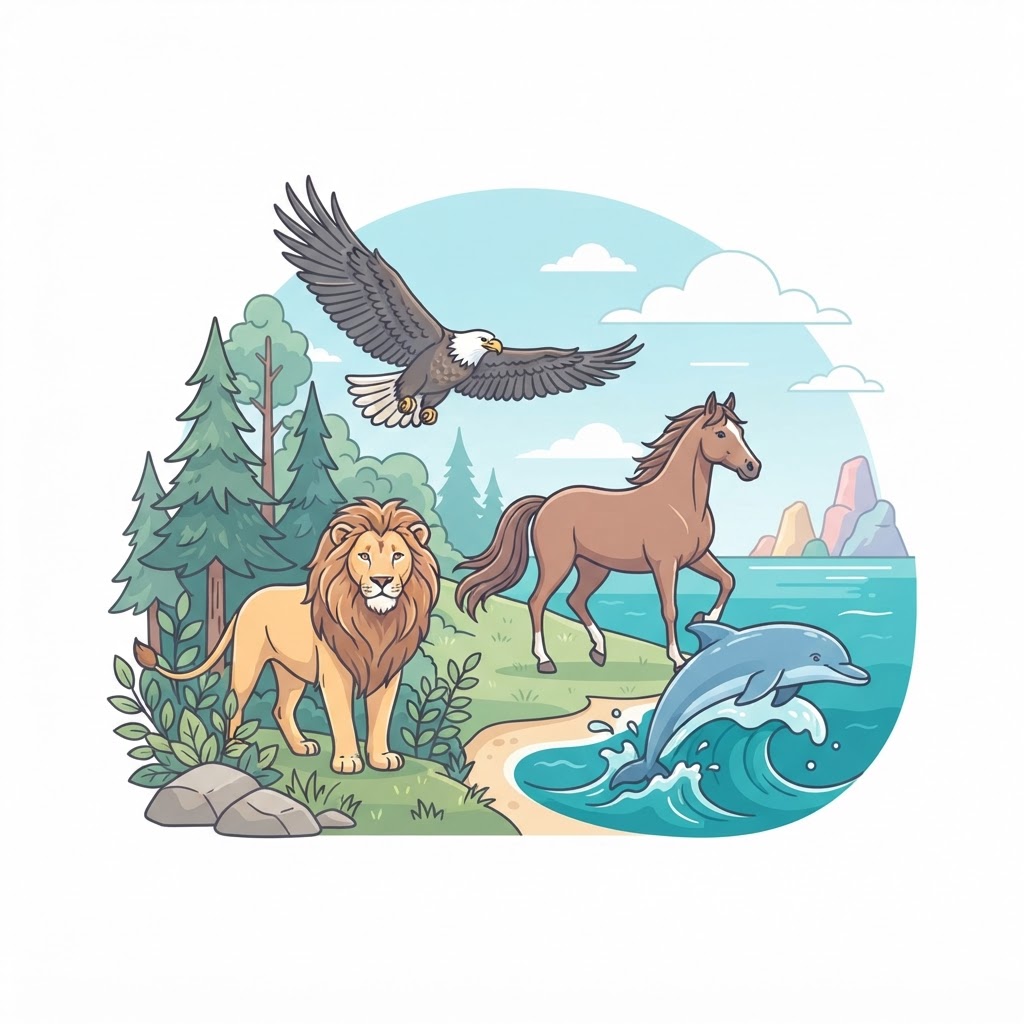
/ˈænɪml/A living creature such as a dog, lion, or rabbit, that is not a plant or a human
Tiếng Việt
động vật
ĂN-ni-mờl
Nhấn mạnh vào âm tiết đầu 'ĂN', âm 'ni' ngắn và âm 'mờl' nhẹ có âm cuối 'l' uốn lưỡi.
Một sinh vật sống như chó, sư tử hoặc thỏ, không phải là thực vật hay con người.
Meanings
6 meanings
1A creature that is not a bird, a fish, a reptile, an insect or a humannoungeneral
Một sinh vật không phải là chim, cá, bò sát, côn trùng hay con người (thường chỉ thú có vú)
“The animals and birds of South America are incredibly diverse.”
“Các loài thú và chim ở Nam Mỹ vô cùng đa dạng.”
- a small furry animal
- pack animals such as mules
- The animals were fed only on pasture.
Trong ngữ cảnh thông thường, 'animal' đôi khi được dùng để phân biệt với chim và cá, tương đương với 'thú' trong tiếng Việt.
2Any living thing that is not a plant or a humannoungeneral
Bất kỳ sinh vật sống nào không phải là thực vật hay con người
“This product has not been tested on animals.”
“Sản phẩm này chưa được thử nghiệm trên động vật.”
- Most cloned animals die at a premature age.
- animals bred in captivity
- glass cases of stuffed animals
Đây là nghĩa phổ biến nhất. Lưu ý cụm từ 'animal testing' (thử nghiệm trên động vật) thường dùng nghĩa này.
3Any living creature, including humansnounacademic
Bất kỳ sinh vật sống nào, bao gồm cả con người
“Humans are the only animals to have developed speech.”
“Con người là loài động vật duy nhất phát triển được ngôn ngữ.”
- These birds perform a ritual which is unique in the animal kingdom.
Trong sinh học và học thuật, con người được xếp vào nhóm 'động vật'. Hãy cẩn thận khi dịch để tránh gây hiểu lầm về mặt văn hóa.
4A person who behaves in a cruel or unpleasant way, or who is very dirtynounemotions
Một người cư xử độc ác, khó chịu hoặc rất bẩn thỉu
“The person who did this is an animal, a brute.”
“Kẻ làm ra việc này là một con thú, một kẻ tàn bạo.”
- Don't be such an animal! Use a napkin.
Đây là cách dùng mang tính xúc phạm mạnh. Trong tiếng Việt có thể dịch là 'đồ thú vật' hoặc 'kẻ súc sinh'.
5A particular type of person, thing, or organizationnoungeneral
Một loại người, sự vật hoặc tổ chức cụ thể nào đó
“She's not a political animal.”
“Cô ấy không phải là một chính trị gia bẩm sinh (người có thiên hướng chính trị).”
- He’s the most political animal on the city council.
- a party animal
Thường dùng trong các cụm như 'party animal' (người thích tiệc tùng) hay 'political animal' (người nhạy bén chính trị).
6Relating to the physical needs and basic feelings of people, rather than to their mindsadjectiveemotions
Liên quan đến các nhu cầu thể chất và cảm xúc cơ bản của con người, thay vì trí tuệ
“He felt a sudden animal panic when he realized he was trapped.”
“Anh ta cảm thấy một nỗi sợ hãi bản năng đột ngột khi nhận ra mình đã bị sập bẫy.”
- animal desires
- animal passion
- Animal instincts apply to all animals, including humans.
Khi làm tính từ, 'animal' thường được dịch là 'bản năng' hoặc 'thể xác' tùy ngữ cảnh.
Word bank
Common phrases
- wild animal
- domestic animal
- farm animal
- animal rights
- animal welfare
- party animal
- stuffed animal
- animal instinct
- animal magnetism
- animal cunning
- animal spirits
Grammar & forms
Grammar
- countable
- singular
Inflections
- plural
- animals
Word family
- animalisticadjective
- animallyadverb
Usage patterns
- animal rights
- animal welfare
- animal instincts
- animal magnetism
Avoid mistakes
Common mistakes
The police are looking for the animal who did this.
The police are looking for the brute/monster who did this.
While 'animal' can be used as an insult, in formal or serious contexts describing criminals, specific terms like 'perpetrator' or stronger figurative words are often preferred to avoid confusion with actual animals, though 'animal' is acceptable in informal speech.
I saw many animal in the zoo.
I saw many animals in the zoo.
Animal is a countable noun and must be pluralized when referring to more than one.
Don't confuse with
- mammal
a specific type of animal that gives birth to live young and feeds them milk
“Whales are mammals, not fish.”
All mammals are animals, but not all animals are mammals.
- creature
any living thing that can move around
“Strange creatures live in the deep ocean.”
'Creature' is often used in stories or for mysterious animals.
Academic collocations
Words that pair with "animal" in formal and academic writing
- verb
- studyprotecthuntbreed
- adjective
- wilddomesticendangerednocturnal
- noun
- kingdomspeciesbehaviorwelfare
- preposition
- amongin
In context
Real-world examples
- daily life
In Vietnamese culture, the buffalo is a very important farm animal.
Trong văn hóa Việt Nam, con trâu là một loài động vật nông nghiệp rất quan trọng.
Con trâu được coi là 'đầu cơ nghiệp' trong nền văn minh lúa nước của Việt Nam.
- academic
The wildlife sanctuary aims to protect endangered animals from extinction.
Khu bảo tồn động vật hoang dã nhằm mục đích bảo vệ các loài động vật quý hiếm khỏi nguy cơ tuyệt chủng.
Việt Nam có nhiều khu bảo tồn thiên nhiên quan trọng như Cúc Phương hay Nam Cát Tiên.
- business
Many companies are moving away from animal testing to meet ethical standards.
Nhiều công ty đang dần từ bỏ việc thử nghiệm trên động vật để đáp ứng các tiêu chuẩn đạo đức.
Xu hướng tiêu dùng mỹ phẩm 'cruelty-free' (không thử nghiệm trên động vật) đang ngày càng phổ biến tại Việt Nam.
Notes for Vietnamese speakers
- Trong tiếng Việt, 'con' là loại từ phổ biến nhất khi đi kèm với tên các loài động vật (ví dụ: con chó, con mèo).
- Mười hai con giáp (12 Zodiac signs) đóng vai trò cực kỳ quan trọng trong đời sống tâm linh và văn hóa người Việt.
- Từ 'animal' (thú tính) khi dùng để chỉ người trong tiếng Việt thường mang sắc thái xúc phạm rất nặng nề, tương đương với 'đồ thú vật' hoặc 'kẻ súc sinh'.
Etymology
From Latin animal, animalis ('living being, breathing being'), from anima ('breath, soul, life'). Introduced into Middle English via Old French.
Exam levels
IELTS
4.0
CEFR
A1
TOEIC
0-250
More in Vietnamese
- Cambridge English–Vietnamese Dictionary
Nghĩa tiếng Việt kèm ví dụ từ Cambridge Dictionary.
- VDict (Anh–Việt)
Từ điển Anh–Việt với ví dụ song ngữ.