currency
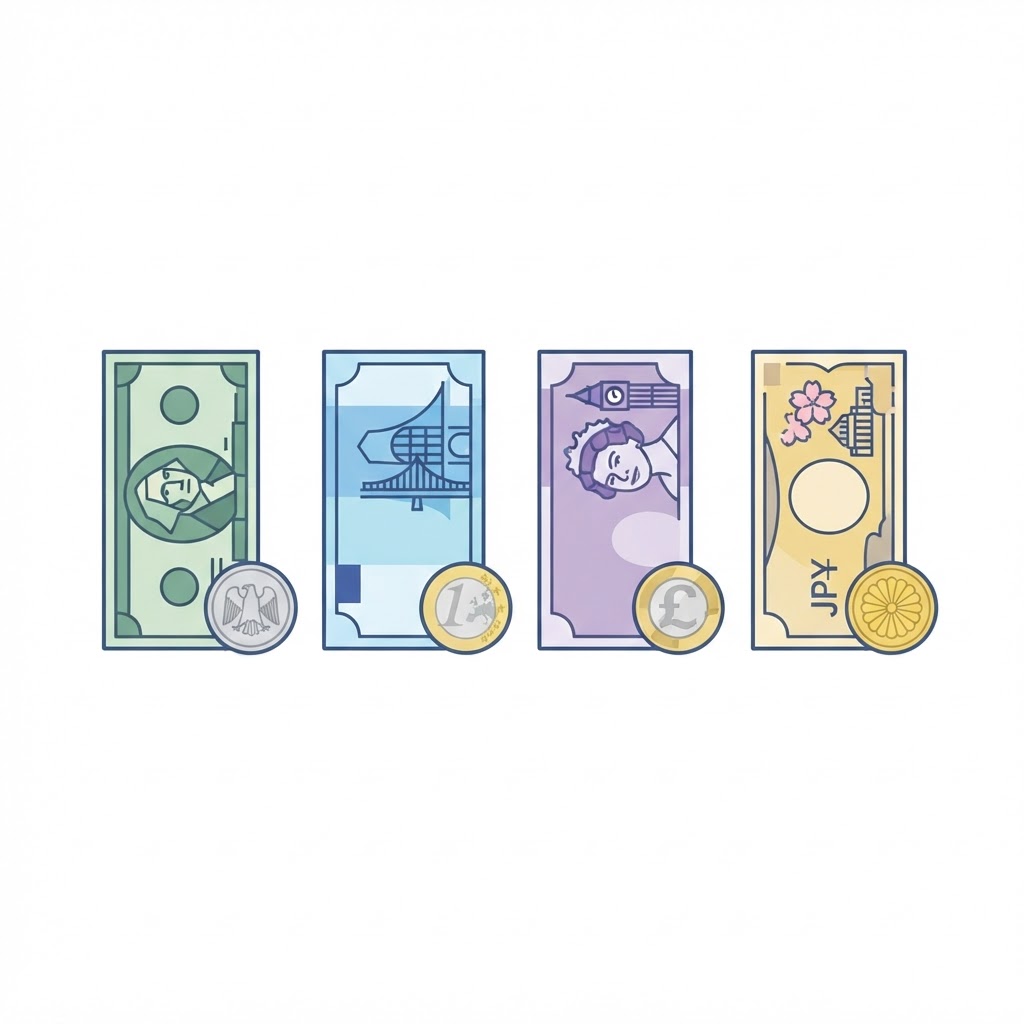
/ˈkɜːrənsi/The system of money used in a country, or the state of an idea or term being generally accepted and used.
Tiếng Việt
tiền tệ
CƠ-rần-si
Nhấn mạnh âm đầu 'CƠ', âm 'rần' đọc nhanh, âm 'si' nhẹ ở cuối.
Hệ thống tiền tệ của một quốc gia, hoặc sự phổ biến và được chấp nhận rộng rãi của một ý tưởng hoặc thuật ngữ.
Meanings
6 meanings
1The system of money that a particular country or region uses.finance
Hệ thống tiền tệ mà một quốc gia hoặc khu vực cụ thể sử dụng.
“You can convert sterling into the local currency at any bank.”
“Bạn có thể đổi đồng bảng Anh sang đồng nội tệ tại bất kỳ ngân hàng nào.”
- Trading in foreign currencies can be a high-risk investment.
- Argentina's currency was pegged to the dollar for many years.
- The system allows currencies to fluctuate within certain limits.
- The country may be forced to completely devalue its currency.
Trong ngữ cảnh này, 'currency' thường đi kèm với các tính từ như 'local' (nội tệ), 'foreign' (ngoại tệ), hoặc 'hard' (ngoại tệ mạnh).
2The fact that something, such as a word, phrase, or idea, is used or accepted by a lot of people.communication
Sự phổ biến, sự thịnh hành hoặc việc một từ ngữ, cụm từ, ý tưởng được nhiều người chấp nhận và sử dụng.
“The term ‘post-industrial’ now has wide currency in academic circles.”
“Thuật ngữ ‘hậu công nghiệp’ hiện đang được sử dụng rộng rãi trong giới học thuật.”
- This belief has general currency among the local population.
- How did such a ridiculous idea gain currency?
- Some of these old superstitions still have currency in rural areas.
Cụm từ 'gain currency' là một thành ngữ phổ biến có nghĩa là 'trở nên phổ biến/được chấp nhận rộng rãi'.
3Money in the form of paper notes or coins that are currently in circulation.finance
Tiền mặt dưới dạng tiền giấy hoặc tiền xu hiện đang được lưu hành.
“The bank was accused of distributing counterfeit currency.”
“Ngân hàng bị cáo buộc phân phối tiền giả.”
- Currency is bought on the foreign exchange market.
- The traveler carried a mix of local currency and US dollars.
Trong tiếng Anh kỹ thuật, 'currency' nhấn mạnh vào tính chất vật lý và sự lưu thông của tiền mặt (tiền giấy và tiền xu).
4The state of being current or up to date.general
Tình trạng còn giá trị, tính thời sự hoặc tính cập nhật.
“The currency of the data in this report is essential for its accuracy.”
“Tính cập nhật của dữ liệu trong báo cáo này là thiết yếu cho độ chính xác của nó.”
- To maintain the currency of your skills, you must attend regular training.
Nghĩa này ít phổ biến hơn, thường dùng trong môi trường chuyên nghiệp để chỉ thông tin hoặc kỹ năng vẫn còn giá trị sử dụng.
5The rate at which anything is generally valued; general estimation.literary
Mức độ đánh giá chung; giá trị hoặc sự tín nhiệm mà ai đó/cái gì đó nhận được.
“In the 18th century, the currency of his reputation was high.”
“Vào thế kỷ 18, danh tiếng của ông ấy rất có giá trị.”
- The idea lost its currency as new scientific evidence emerged.
Đây là nghĩa cổ hoặc mang tính văn học, ví danh tiếng hoặc giá trị con người như một loại tiền tệ.
6The quality of being fluent or ready in speech.communication
Sự lưu loát hoặc sẵn sàng trong lời nói.
“He spoke with a currency and ease that charmed the audience.”
“Anh ấy nói chuyện một cách lưu loát và tự nhiên khiến khán giả mê mẩn.”
- Her currency of utterance made her a formidable debater.
Nghĩa này cực kỳ hiếm gặp trong tiếng Anh hiện đại, thường chỉ thấy trong văn học cổ.
Word bank
Near synonyms
Antonyms
Common phrases
- foreign
- domestic
- local
- common
- gain
- have
- wide
- stable
- weak
Grammar & forms
Avoid mistakes
Common mistakes
The English money is the pound.
The UK's currency is the pound.
Use 'currency' when referring to a country's formal system of money.
The idea made currency quickly.
The idea gained currency quickly.
The standard idiom is 'gain currency', not 'make currency'.
He has a lot of currencies in his pocket.
He has a lot of currency in his pocket.
When referring to physical cash in one system, 'currency' is usually uncountable.
I need to exchange my currencey.
I need to exchange my currency.
Common misspelling with 'ey' at the end.
The currency for the US is the dollar.
The currency of the US is the dollar.
Use the preposition 'of' to link a currency to its country.
Don't confuse with
- money
The general medium of exchange.
“I need some money.”
'Money' is usually uncountable, while 'currency' is used for specific national systems and is often countable.
- current
Happening now; or a flow of water/electricity.
“The current situation is difficult.”
Do not confuse the adjective 'current' with the noun 'currency'.
Academic collocations
Words that pair with "currency" in formal and academic writing
- verb
- gainacquireloseenjoy
- adjective
- widegeneralnationalinternationalpolitical
- noun
- markettradingexchangedevaluation
- preposition
- ofin
In context
Real-world examples
- daily life
The Vietnamese Dong is the official currency of Vietnam.
Đồng Việt Nam là đơn vị tiền tệ chính thức của Việt Nam.
Xác định rõ đơn vị tiền tệ sử dụng hàng ngày tại Việt Nam.
- business
Investors are worried about the stability of the local currency.
Các nhà đầu tư đang lo lắng về sự ổn định của đồng nội tệ.
Phản ánh mối quan tâm về kinh tế vĩ mô thường thấy trên báo chí tài chính Việt Nam.
- academic
That conspiracy theory gained currency through social media.
Thuyết âm mưu đó đã trở nên phổ biến thông qua mạng xã hội.
Giải thích cách một ý tưởng (thường là tiêu cực) lan truyền trong cộng đồng mạng.
- business
You should check the exchange rate before converting your currency.
Bạn nên kiểm tra tỷ giá hối đoái trước khi đổi tiền.
Lời khuyên thực tế cho người Việt khi đi du lịch nước ngoài hoặc giao dịch ngoại tệ.
Notes for Vietnamese speakers
- Tại Việt Nam, từ 'tiền tệ' thường mang sắc thái trang trọng, dùng trong kinh tế. Trong đời sống hàng ngày, người dân thường dùng từ 'tiền' hoặc tên đơn vị cụ thể là 'Đồng'.
- Việt Nam hiện chỉ lưu hành tiền giấy và tiền polymer, tiền xu đã ngừng phát hành và sử dụng trong lưu thông thực tế từ lâu.
- Khái niệm 'gain currency' (trở nên phổ biến) thường được dịch thoát ý thành 'trở nên thịnh hành' hoặc 'được lan truyền rộng rãi' trong tiếng Việt.
Etymology
Middle English: from Old French 'curraunt' (running), from Latin 'currere' (to run). The sense 'condition of flowing' dates from the mid-17th century, later developing into the sense of 'general acceptance' and 'circulating money'. Source: Oxford Dictionary of English Etymology.
Exam levels
IELTS
6.0
CEFR
B1
TOEIC
505-600
More in Vietnamese
- Từ điển Lạc Việt (Laban Dictionary)
Từ điển Anh-Việt phổ biến nhất với đầy đủ các nghĩa chuyên ngành tài chính.
- TFlat Dictionary (Soha)
Cung cấp các ví dụ thực tế và tra cứu nhanh các cụm từ liên quan đến tiền tệ.