belongings
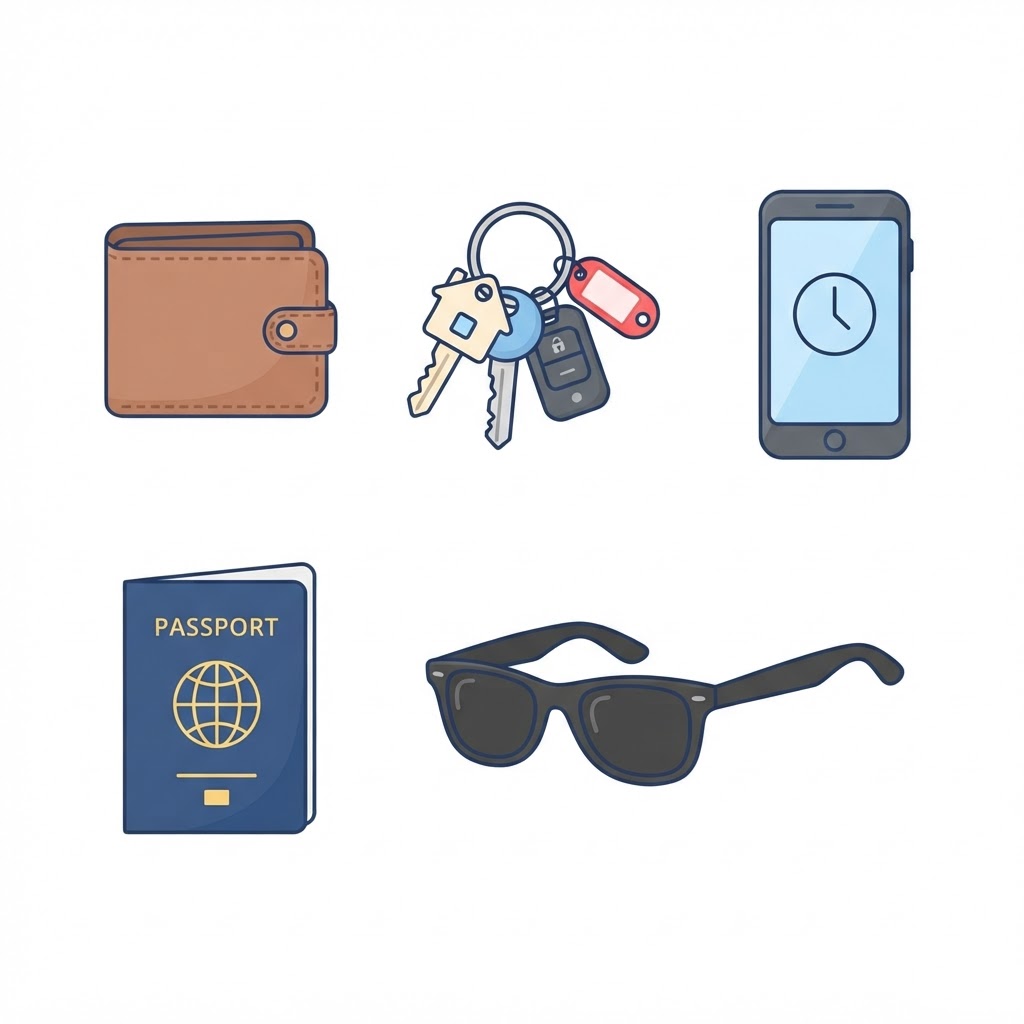
/bɪˈlɔːŋɪŋz/The things that a person owns, especially movable items that can be carried.
Tiếng Việt
đồ đạc cá nhân
bi-LOONG-ingz
Nhấn mạnh vào âm tiết thứ hai 'LOONG', âm cuối phát âm nhẹ âm 'z'.
Những đồ vật mà một người sở hữu, đặc biệt là những vật dụng có thể di chuyển và mang theo được.
Meanings
1 meaning
1The things that you own which can be moved, for example not land or buildings.general
Những đồ vật mà bạn sở hữu có thể di chuyển được, ví dụ như không phải đất đai hay nhà cửa.
“Insurance of property and personal belongings.”
“Bảo hiểm tài sản và đồ đạc cá nhân.”
- I put a few personal belongings in a bag and left the house for the last time.
- Fleeing the flood waters, families here packed their belongings and headed to higher land.
- You may leave your belongings in the cloakroom.
Từ 'belongings' luôn được sử dụng ở dạng số nhiều (có 's') khi chỉ đồ đạc, tài sản cá nhân. Không dùng từ này để chỉ bất động sản như nhà cửa hay đất đai.
Word bank
Near synonyms
Common phrases
- personal belongings
- meagre belongings
- collect belongings
- pack belongings
- gather belongings
Grammar & forms
Avoid mistakes
Common mistakes
He lost all his belonging.
He lost all his belongings.
When referring to personal possessions, the word is almost always used in the plural form.
The belongings is in the car.
The belongings are in the car.
'Belongings' is a plural noun and must take a plural verb.
I have a lot of belongingses.
I have a lot of belongings.
'Belongings' is already plural; do not add another 's' or 'es'.
She packed her personal belonging.
She packed her personal belongings.
The standard collocation is 'personal belongings', always in the plural.
He sold his land and other belongings.
He sold his land and other property.
'Belongings' typically refers to movable items, not real estate or land.
Don't confuse with
- property
things owned, often including land and buildings
“He owns several properties in London.”
Use 'belongings' for movable personal items, and 'property' for real estate or formal ownership.
- luggage
bags and suitcases used for travel
“We left our luggage at the hotel.”
'Luggage' refers specifically to the bags themselves, while 'belongings' refers to the items inside them as well.
Academic collocations
Words that pair with "belongings" in formal and academic writing
- verb
- packcollectgatherleaveprotect
- adjective
- personalmeagrefewworldly
- noun
- insurancebagbox
- preposition
- inwithamong
In context
Real-world examples
- daily life
Please ensure you have all your personal belongings before leaving the train.
Vui lòng đảm bảo bạn đã mang theo tất cả đồ đạc cá nhân trước khi rời khỏi tàu.
Đây là câu thông báo rất phổ biến trên các phương tiện giao thông công cộng tại Việt Nam như tàu điện Cát Linh - Hà Đông hoặc xe buýt.
- business
The company is not responsible for any loss of employees' belongings in the office.
Công ty không chịu trách nhiệm nếu đồ đạc của nhân viên bị mất trong văn phòng.
Một quy định thường thấy trong nội quy văn phòng hoặc các không gian làm việc chung (co-working space) tại Việt Nam.
- academic
Students must store their belongings in the lockers outside the testing room during the final examination.
Học sinh phải cất đồ đạc trong tủ đồ bên ngoài phòng thi trong suốt thời gian thi cuối kỳ.
Phản ánh quy chế thi cử nghiêm ngặt tại các trường học và đại học ở Việt Nam, nơi thí sinh không được mang vật dụng cá nhân vào phòng thi.
- travel
During the Tet holiday travel rush, keeping an eye on your belongings is essential.
Trong đợt cao điểm đi lại dịp Tết, việc để mắt đến đồ đạc của bạn là rất cần thiết.
Tết Nguyên Đán là thời điểm đi lại đông đúc nhất ở Việt Nam, do đó việc bảo quản hành lý và tư trang luôn được đặt lên hàng đầu.
Notes for Vietnamese speakers
- Trong tiếng Việt, 'belongings' thường được dịch là 'đồ đạc', 'đồ dùng cá nhân' hoặc 'tư trang' (thường dùng cho đồ có giá trị như trang sức, tiền bạc mang theo người).
- Khác với 'tài sản' (property/assets) có thể bao gồm cả nhà đất, 'belongings' chỉ giới hạn ở những vật dụng có thể mang vác, di chuyển được.
Etymology
Derived from the verb 'belong' with the suffix '-ing' and the plural '-s'. The use of the noun to mean 'personal possessions' dates back to the mid-19th century.
Exam levels
IELTS
6.0
CEFR
B2
TOEIC
705-800
More in Vietnamese
- TFlat Dictionary (Soha)
Tra cứu nghĩa tiếng Việt chi tiết với các ví dụ cụ thể.
- Cambridge English–Vietnamese Dictionary
Nghĩa tiếng Việt kèm ví dụ từ Cambridge Dictionary.
- VDict (Anh–Việt)
Từ điển Anh–Việt với ví dụ song ngữ.