odour
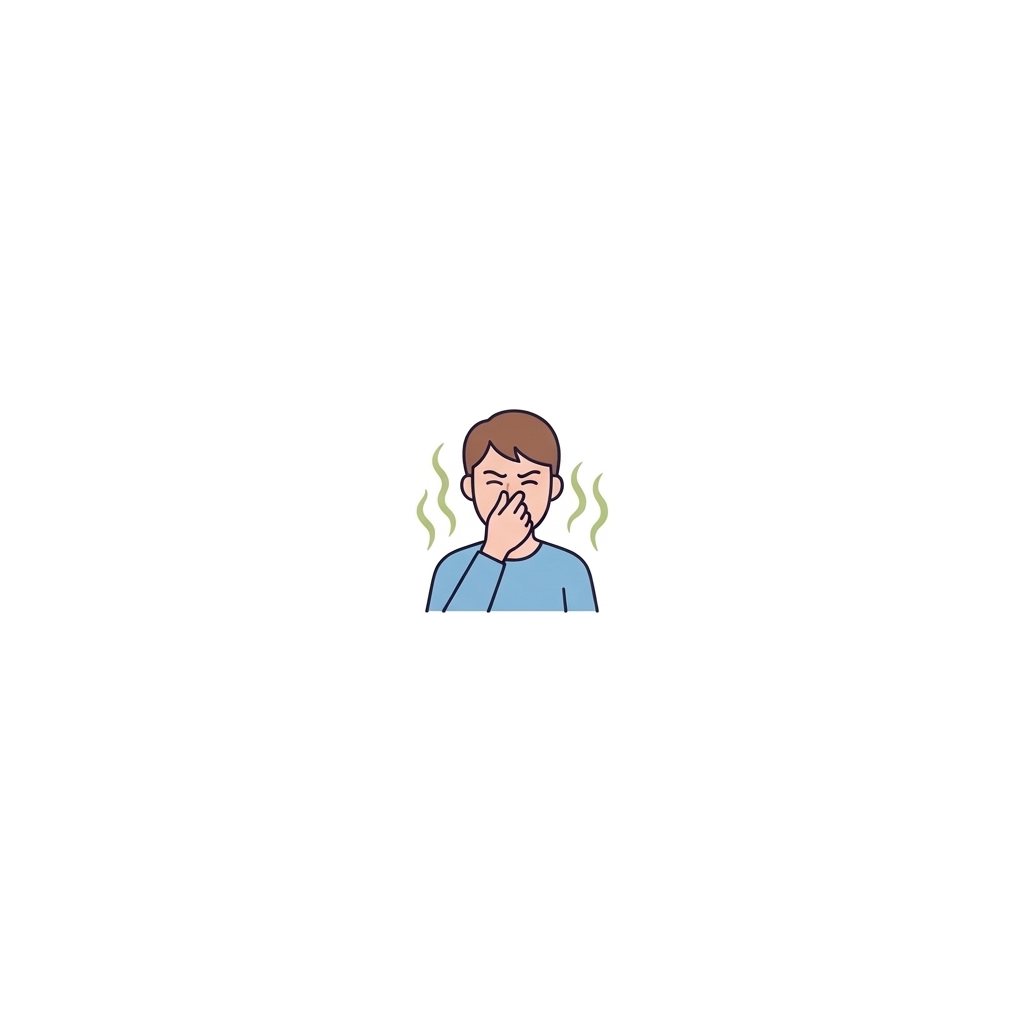
/ˈəʊdər/A smell, especially one that is unpleasant.
Tiếng Việt
mùi (thường là mùi khó chịu)
ÂU-đờ
Nhấn mạnh âm đầu 'ÂU', âm 'đờ' đọc nhẹ, lướt nhanh và cong lưỡi nhẹ ở cuối (đối với giọng Mỹ).
Mùi, đặc biệt là mùi khó chịu.
Meanings
3 meanings
1A smell, especially one that is unpleasant.general
Mùi, đặc biệt là mùi khó chịu hoặc mùi hôi.
“I smelled the distinct odour of something burning.”
“Tôi ngửi thấy mùi khét rất rõ ràng.”
- An unpleasant odour came from the package.
- There was an odour of decay in the house.
- Use this spray to remove everyday household odours.
- Inside the room there was the unmistakable odour of sweaty feet.
Trong tiếng Việt, 'odour' thường mang nghĩa tiêu cực (mùi hôi, mùi khó chịu). Đối với mùi thơm, hãy dùng 'aroma' (thức ăn) hoặc 'fragrance' (nước hoa, hoa).
2A particular quality that can be noticed.literary
Một đặc điểm hoặc tính chất cụ thể có thể nhận thấy được (nghĩa bóng).
“The odour of hypocrisy hung about everything she said.”
“Dấu hiệu của sự đạo đức giả bao trùm lên mọi lời cô ấy nói.”
- Lieberman said the article had an odour of anti-Semitism.
Nghĩa bóng này thường dùng trong văn chương để chỉ một cảm giác hoặc tính chất tồi tệ toát ra từ một sự việc, tương tự như cách nói 'sặc mùi' trong tiếng Việt (ví dụ: sặc mùi dối trá).
3To have or not have somebody's approval and support (used in the phrase 'be in good/bad odour').formal
Được hoặc không được ai đó tán thành và ủng hộ (dùng trong cụm từ 'be in good/bad odour').
“He is currently in bad odour with the management after the recent project failure.”
“Anh ấy hiện đang bị ban giám đốc thất sủng sau thất bại của dự án gần đây.”
Cụm từ 'be in bad odour with somebody' mang nghĩa trang trọng, tương đương với 'bị ai đó ghét bỏ' hoặc 'thất sủng' trong tiếng Việt.
Word bank
Grammar & forms
Avoid mistakes
Common mistakes
The flower has a beautiful odour.
The flower has a beautiful fragrance.
Odour is typically used for unpleasant smells, while fragrance is used for pleasant ones like flowers.
I am cooking dinner and the odour is great.
I am cooking dinner and the aroma is great.
Use aroma for pleasant food smells.
He wears a strong odour.
He wears a strong cologne.
Odour refers to a natural smell (often body odour), not applied fragrances like perfume or cologne.
The odour of the music was loud.
The sound of the music was loud.
Odour only applies to the sense of smell, not hearing.
We need to buy an odour for the room.
We need to buy an air freshener for the room.
An odour is the smell itself, not the product that creates or masks it.
Don't confuse with
- aroma
a pleasant, often distinctive smell
“The aroma of fresh coffee filled the room.”
Use 'aroma' for pleasant smells (like food or coffee) and 'odour' usually for unpleasant ones.
- fragrance
a sweet or pleasant smell
“The delicate fragrance of roses.”
Use 'fragrance' for flowers or perfumes, whereas 'odour' is typically negative.
Academic collocations
Words that pair with "odour" in formal and academic writing
- verb
- detectemiteliminateproduce
- adjective
- foulpungentdistinctmusty
- noun
- concentrationemissioncontrol
- preposition
- offrom
In context
Real-world examples
- daily life
Body odour is a common concern during the hot and humid Vietnamese summers.
Mùi cơ thể là một mối bận tâm phổ biến trong mùa hè nóng ẩm ở Việt Nam.
Khí hậu nhiệt đới tại Việt Nam khiến việc kiểm soát mùi cơ thể trở thành một chủ đề vệ sinh cá nhân quan trọng.
- business
The factory was fined for emitting a foul odour into the surrounding neighborhood.
Nhà máy đã bị phạt vì thải mùi hôi thối ra khu dân cư xung quanh.
Ô nhiễm môi trường và khí thải từ các khu công nghiệp là vấn đề thời sự được quan tâm nhiều tại Việt Nam.
- academic
Chemical reactions in the laboratory often produce distinct odours.
Các phản ứng hóa học trong phòng thí nghiệm thường tạo ra những mùi đặc trưng.
Ngữ cảnh học thuật tiêu chuẩn dành cho học sinh, sinh viên khối ngành khoa học tự nhiên.
- daily life
While some foreigners find the odour of durian offensive, many locals love it.
Trong khi một số người nước ngoài thấy mùi sầu riêng khó chịu, nhiều người dân địa phương lại rất thích.
Sầu riêng là loại trái cây đặc sản của Việt Nam và Đông Nam Á, nổi tiếng với mùi hương gây tranh cãi.
- household
She used baking soda to remove the musty odour from the old wooden cabinet.
Cô ấy dùng muối nở để khử mùi ẩm mốc từ chiếc tủ gỗ cũ.
Độ ẩm cao ở Việt Nam thường gây ra tình trạng nấm mốc và mùi ẩm thấp cho đồ nội thất bằng gỗ.
Notes for Vietnamese speakers
- Ở Việt Nam, khí hậu nhiệt đới gió mùa nóng ẩm khiến vấn đề kiểm soát mùi cơ thể (body odour) rất được quan tâm, đặc biệt là vào mùa hè.
- Một số món ăn đặc sản của Việt Nam như nước mắm, mắm tôm hay sầu riêng có mùi rất nồng. Người bản xứ thường coi đó là 'aroma' (mùi thơm hấp dẫn), nhưng người nước ngoài chưa quen có thể coi đó là 'odour' (mùi khó chịu).
Etymology
From Middle English odour, from Anglo-Norman odour, from Old French odor, from Latin odor ('smell, scent').
Exam levels
IELTS
7.0
CEFR
C2
TOEIC
855-990
More in Vietnamese
- Cambridge English–Vietnamese Dictionary
Nghĩa tiếng Việt kèm ví dụ từ Cambridge Dictionary.
- VDict (Anh–Việt)
Từ điển Anh–Việt với ví dụ song ngữ.