camping
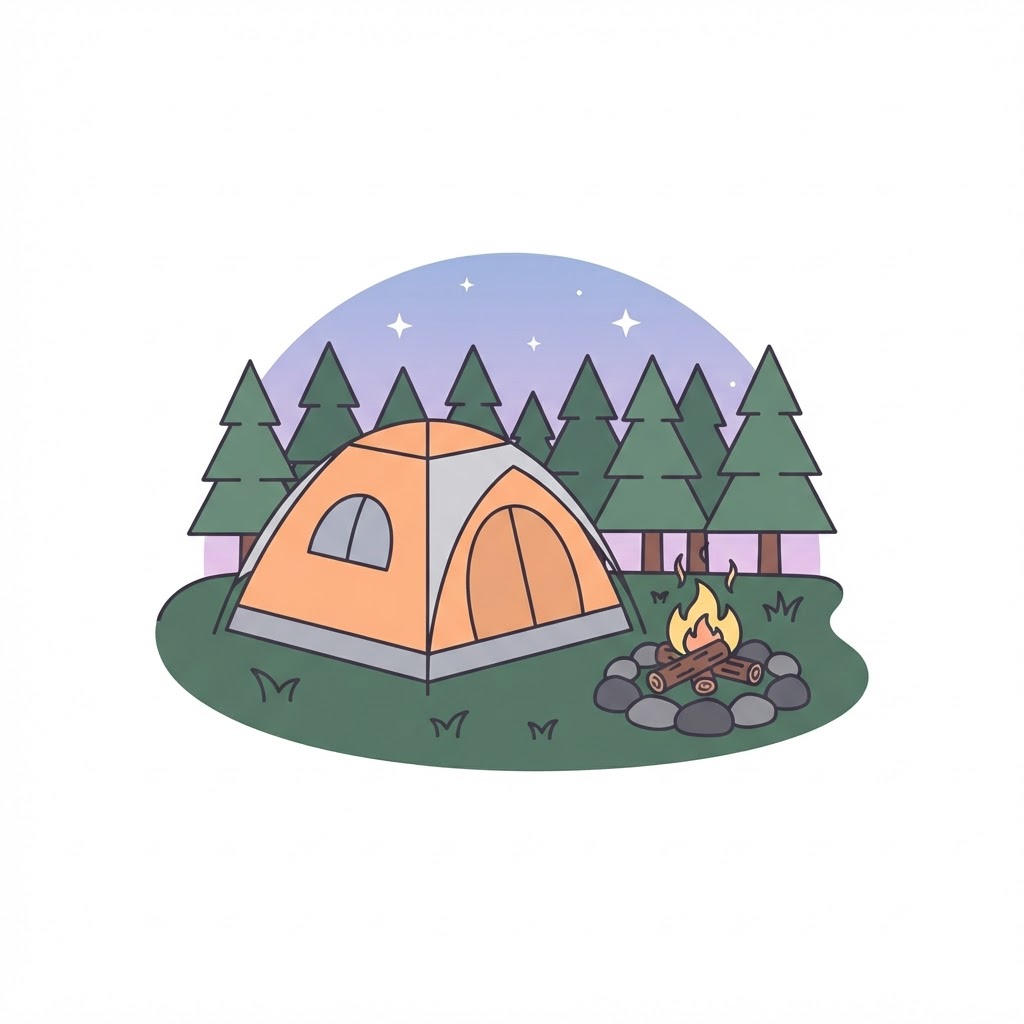
/ˈkæmpɪŋ/The activity of staying and sleeping in a tent or similar shelter while on holiday.
Tiếng Việt
sự cắm trại
KĂM-pinh
âm 'k' phát âm mạnh, 'ă' giống âm ă trong tiếng Việt, kết thúc bằng âm 'pinh' nhẹ
Hoạt động ở lại và ngủ trong lều hoặc nơi trú ẩn tương tự trong kỳ nghỉ.
Meanings
2 meanings
1The activity of living in a tent, etc. on holiday.nountravel
Hoạt động sống trong lều, v.v. vào kỳ nghỉ.
“Do you go camping?”
“Bạn có hay đi cắm trại không?”
- In 1993, camping was the fifth most popular American vacation activity.
- We're going camping in the South of France this summer.
- Camping is a great way to see the countryside for very little money.
- They bought all the necessary camping gear before their trip.
Người Việt hay nhầm lẫn 'go camping' với 'go to camping'. Hãy nhớ cấu trúc 'go + V-ing' cho các hoạt động giải trí.
2Present participle and gerund of camp: to set up a tent or shelter and stay there for a short time.verbdaily life
Phân từ hiện tại và danh động từ của 'camp': dựng lều hoặc nơi trú ẩn và ở đó trong một thời gian ngắn.
“We were camping by the lake when the storm started.”
“Chúng tôi đang cắm trại bên hồ thì cơn bão bắt đầu.”
- They have been camping out in the backyard all week.
- Are you planning on camping near the festival site?
Khi dùng ở dạng V-ing như thế này, nó thường mô tả hành động đang diễn ra tại một thời điểm cụ thể.
Word bank
Near synonyms
Common phrases
- camping gear
- camping holiday
- camping site
- camping stove
- wild camping
- camping out
- camping overnight
Grammar & forms
Grammar
- uncountable
- countable
- intransitive
Inflections
- singular
- camping
- third_person_singular
- camps
- past_simple
- camped
- past_participle
- camped
- present_participle
- camping
Word family
Usage patterns
- go camping
- camping trip
- camping equipment
- camp out
- camp in something
Avoid mistakes
Common mistakes
I want to go to camping.
I want to go camping.
Do not use 'to' after 'go' when followed by an -ing activity.
We stayed in a camping.
We stayed at a campsite.
In English, 'camping' is the activity; the place is a 'campsite' or 'campground'.
I like the camping.
I like camping.
When talking about an activity in general, usually no article is needed.
Let's make camping.
Let's go camping.
The standard verb for doing -ing leisure activities is 'go'.
He is a good camping.
He is good at camping.
You cannot be a 'camping'; you can be a 'camper' or 'good at camping'.
Don't confuse with
Academic collocations
Words that pair with "camping" in formal and academic writing
- verb
- enjoypreferprohibit
- adjective
- wildovernightrecreational
- noun
- tripsiteequipment
- preposition
- duringon
In context
Real-world examples
- daily life
We are planning a camping trip to Da Lat this weekend.
Chúng tôi đang lên kế hoạch cho một chuyến đi cắm trại ở Đà Lạt cuối tuần này.
Đà Lạt là một trong những địa điểm cắm trại phổ biến nhất ở Việt Nam nhờ khí hậu mát mẻ.
- business
The company organized a camping activity to improve teamwork.
Công ty đã tổ chức một hoạt động cắm trại để cải thiện tinh thần làm việc nhóm.
Các hoạt động 'team building' kết hợp cắm trại đang trở nên rất phổ biến trong văn hóa doanh nghiệp tại Việt Nam.
- academic
Students are required to bring their own camping gear for the school expedition.
Học sinh được yêu cầu tự mang theo dụng cụ cắm trại cho chuyến thám hiểm của trường.
Các trường quốc tế hoặc trường tư thục tại Việt Nam thường tổ chức các buổi cắm trại ngoại khóa để rèn luyện kỹ năng sống cho học sinh.
Notes for Vietnamese speakers
- Tại Việt Nam, cắm trại (camping) thường gắn liền với các khu vực đồi núi như Đà Lạt, Hòa Bình hoặc các bãi biển vắng. Khái niệm 'glamping' (cắm trại sang trọng) cũng đang phát triển mạnh mẽ.
- Người Việt thường thích cắm trại theo nhóm lớn, gia đình hoặc bạn bè và thường kết hợp với tiệc nướng BBQ ngoài trời.
- Cần lưu ý về mùa mưa (tháng 5 - tháng 10 ở miền Nam) khi lên kế hoạch đi cắm trại tại Việt Nam để đảm bảo an toàn.
Etymology
Late 19th century: from the verb 'camp'. The verb 'camp' originates in the mid 16th century from the French 'camp' or Italian 'campo', ultimately from the Latin 'campus' meaning 'field'. The specific recreational sense of 'camping' developed as a popular pastime in the late Victorian era.
Exam levels
CEFR
A2
TOEIC
255-400
More in Vietnamese
- Cambridge English–Vietnamese Dictionary
Nghĩa tiếng Việt kèm ví dụ từ Cambridge Dictionary.
- VDict (Anh–Việt)
Từ điển Anh–Việt với ví dụ song ngữ.