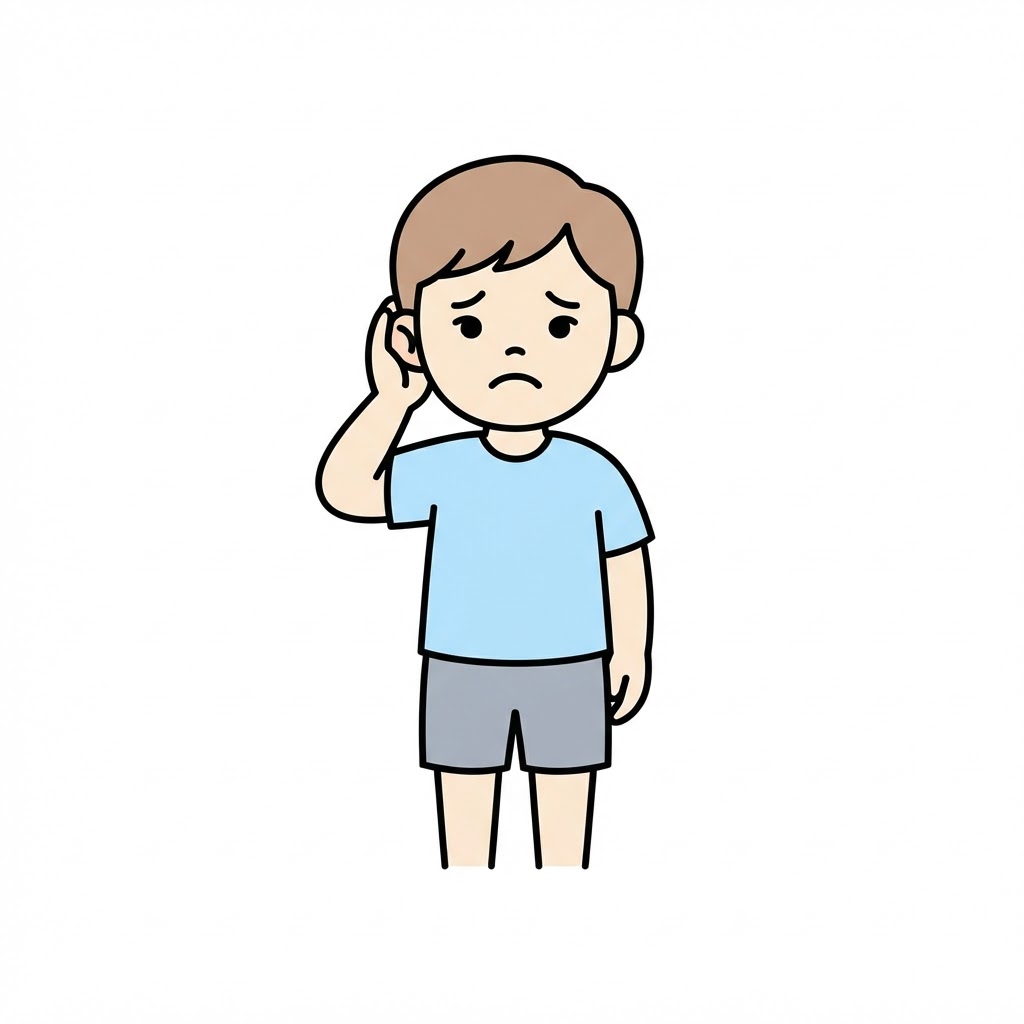
earache
/ˈɪreɪk/A pain inside the ear.
Tiếng Việt
chứng đau tai
I-rây-k
Nhấn mạnh âm đầu 'I', âm 'rây' đọc liền, và bật nhẹ âm 'k' ở cuối.
Cơn đau ở bên trong tai.
Meanings
2 meanings
1Pain inside the ear.daily life
Cơn đau ở bên trong tai.
“He was crying because he had a terrible earache.”
“Cậu bé đang khóc vì bị đau tai dữ dội.”
- She complained of earache and a sore throat.
- If the earache persists, you should see a doctor.
- Swimming in dirty water can sometimes cause earaches.
Trong tiếng Anh Mỹ, 'earache' thường dùng như danh từ đếm được (have an earache), trong khi tiếng Anh Anh có thể dùng như danh từ không đếm được (have earache).
2Annoyance or aggravation caused by noise, especially the sound of someone nagging, complaining, or issuing orders.communication
Sự bực mình hoặc khó chịu do tiếng ồn gây ra, đặc biệt là tiếng ai đó cằn nhằn, phàn nàn hoặc ra lệnh.
“I'm getting a lot of earache from my boss about this delayed project.”
“Tôi đang bị sếp cằn nhằn nhức cả tai về dự án bị chậm trễ này.”
- She gave him terrible earache for coming home late.
- I don't want any more earache about this!
Nghĩa bóng này chủ yếu dùng trong tiếng Anh Anh (UK) và mang tính thân mật (informal). Tương đương với cụm từ 'nhức cả tai' hay 'điếc cả tai' trong tiếng Việt.
Word bank
Near synonyms
Common phrases
- terrible earache
- severe earache
- suffer from earache
- give someone earache
- get earache
Grammar & forms
Grammar
- countable_uncountable
Inflections
- plural
- earaches
Usage patterns
- have an earache
- have earache
- give somebody earache
Avoid mistakes
Common mistakes
I have earaches.
I have an earache.
When referring to a single episode of pain at the present moment, it is usually singular with an article ('an earache') or uncountable ('earache').
My earache is paining.
My ear aches.
We do not usually say an ache 'is paining'. Instead, say 'my ear aches' or 'my ear hurts'.
I am suffering earache.
I am suffering from an earache.
The verb 'suffer' requires the preposition 'from' when talking about illnesses or pain.
He gave me an earache about it.
He gave me earache about it.
In the informal UK sense meaning 'nagging' or 'complaining', 'earache' is used as an uncountable noun without 'an'.
I have the earache.
I have an earache.
Do not use the definite article 'the' with earache unless referring to a specific, previously mentioned instance of pain.
Don't confuse with
- headache
pain in the head
“I have a headache from staring at the screen.”
An earache is specific to the ear, while a headache affects the head.
Academic collocations
Words that pair with "earache" in formal and academic writing
- verb
- causetreatsufferrelievedevelop
- adjective
- severemildacutechronicterrible
- noun
- paininfectionsymptomrelief
- preposition
- fromwith
In context
Real-world examples
- daily life
My son woke up in the middle of the night with a severe earache.
Con trai tôi tỉnh dậy giữa đêm vì bị đau tai dữ dội.
Trẻ em ở Việt Nam thường bị viêm tai giữa do thời tiết thay đổi, dẫn đến chứng đau tai.
- medical
The doctor prescribed some antibiotic drops to treat the earache.
Bác sĩ đã kê một số loại thuốc nhỏ tai kháng sinh để điều trị chứng đau tai.
Việc sử dụng thuốc nhỏ tai là phương pháp phổ biến tại các phòng khám tai mũi họng ở Việt Nam.
- business
I had to take a day off work because of a terrible earache.
Tôi đã phải xin nghỉ làm một ngày vì bị đau tai kinh khủng.
Đau tai có thể là lý do chính đáng để xin nghỉ ốm (nghỉ phép bệnh) tại nơi làm việc ở Việt Nam.
- informal
If you don't clean your room, you'll get earache from your mother.
Nếu con không dọn phòng, con sẽ bị mẹ cằn nhằn nhức cả tai đấy.
Nghĩa bóng 'earache' (sự cằn nhằn) tương đương với cách nói 'nhức cả tai' hay 'điếc cả tai' trong tiếng Việt khi bị ai đó phàn nàn liên tục.
Notes for Vietnamese speakers
- Ở Việt Nam, chứng đau tai (đặc biệt ở trẻ em) thường liên quan đến các bệnh lý như viêm tai giữa, thường bùng phát vào lúc giao mùa.
- Trong giao tiếp hàng ngày, người Việt cũng dùng cụm từ 'nhức cả tai' hoặc 'điếc cả tai' với ý nghĩa tương tự như nghĩa lóng của 'earache' trong tiếng Anh (sự cằn nhằn, phàn nàn).
Etymology
Formed from the words 'ear' and 'ache', dating back to Old English 'eare' and 'acan'. The figurative sense meaning 'annoyance from complaining' developed in the 20th century.
Exam levels
IELTS
5.0
CEFR
B1
TOEIC
505-600
More in Vietnamese
- Từ điển Lạc Việt (Laban Dictionary)
Từ điển Anh-Việt trực tuyến phổ biến và đáng tin cậy tại Việt Nam.
- TFlat Dictionary (Soha)
Hệ thống tra cứu từ điển trực tuyến hỗ trợ nhiều chuyên ngành.