bus stop
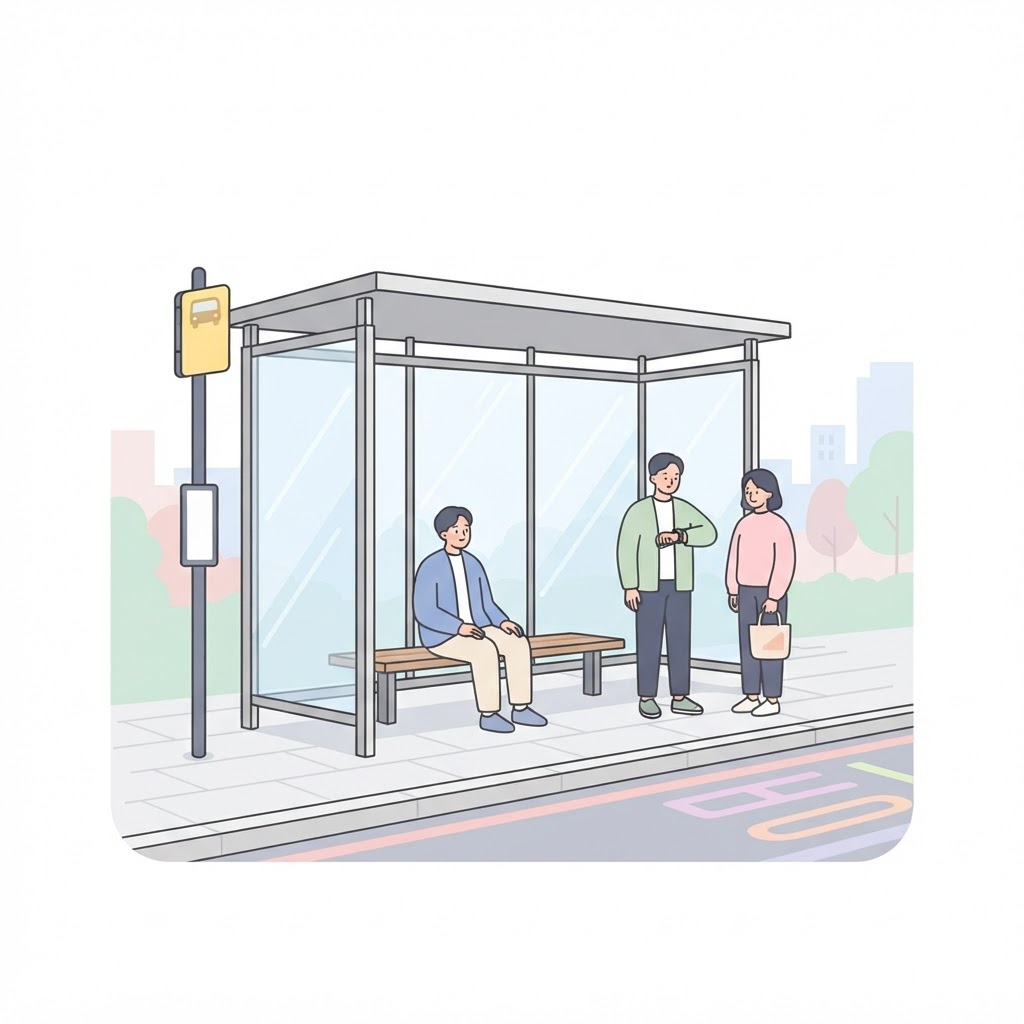
ˈbʌs ˌstɑːpA designated place on a road where buses stop to allow passengers to get on and off.
Tiếng Việt
trạm xe buýt
bát-sờ tóp
Phát âm âm 's' ở cuối từ 'bus' nối liền với âm 't' của từ 'stop'. Trọng âm rơi vào cả hai từ nhưng nhấn mạnh hơn một chút ở 'stop'.
Địa điểm quy định trên đường nơi xe buýt dừng lại để hành khách lên và xuống.
Meanings
4 meanings
1A place, usually with a pole with a sign, where a bus stops to allow passengers to get on and off.daily life
Một địa điểm, thường có cột gắn biển báo, nơi xe buýt dừng để hành khách lên và xuống.
“She was waiting at a bus stop.”
“Cô ấy đang đợi ở một trạm xe buýt.”
- Get off at the next bus stop.
- A car crept up behind her as she walked to the bus stop for school.
- Back then, there was a bus stop half a block from his house.
Luôn sử dụng giới từ 'at' (at a bus stop) để chỉ vị trí tại trạm xe buýt. Tránh nhầm lẫn với 'bus station' (bến xe lớn, nơi xuất phát/kết thúc hành trình).
2The tableau used in short division, taught as if it were a bus stop with the digits treated as people queueing.education
Bảng tính dùng trong phép chia ngắn, được dạy theo hình ảnh ẩn dụ như một trạm xe buýt với các chữ số là người đang xếp hàng.
“The teacher showed the students how to use the bus stop method for division.”
“Giáo viên đã chỉ cho học sinh cách sử dụng phương pháp trạm xe buýt để làm phép chia.”
Đây là một thuật ngữ đặc thù trong giáo dục toán học ở Anh (bus stop method), không phổ biến trong chương trình giáo dục của Việt Nam. Người học chỉ cần biết để hiểu ngữ cảnh khi đọc tài liệu nước ngoài.
3A disco dance popular in the 1970s and 1980s.arts culture
Một điệu nhảy disco thịnh hành vào những năm 1970 và 1980.
“They danced the bus stop at the retro party.”
“Họ đã nhảy điệu bus stop tại bữa tiệc mang phong cách hoài cổ.”
Thường viết hoa chữ cái đầu (the Bus Stop) khi chỉ tên điệu nhảy. Thuật ngữ này mang tính văn hóa phương Tây thập niên 70-80.
4A type of slow chicane on a motor racing circuit.sports
Một loại khúc cua chữ S (chicane) tốc độ chậm trên đường đua xe ô tô.
“The driver braked hard approaching the bus stop chicane.”
“Tay đua đã phanh gấp khi tiến gần đến khúc cua bus stop.”
Thuật ngữ chuyên ngành trong thể thao đua xe (như F1). Nổi tiếng nhất là khúc cua 'Bus Stop chicane' ở trường đua Spa-Francorchamps.
Word bank
Synonyms
Near synonyms
Common phrases
- wait at a bus stop
- walk to the bus stop
- next bus stop
- bus stop sign
- bus stop shelter
Grammar & forms
Avoid mistakes
Common mistakes
I am waiting in the bus stop.
I am waiting at the bus stop.
Use the preposition 'at' for specific points or locations like a bus stop.
Get down at the next bus stop.
Get off at the next bus stop.
Use the phrasal verb 'get off' when leaving a bus or train.
I walked until the bus stop.
I walked to the bus stop.
Use 'to' for destination or direction, not 'until' which is for time.
Where is the bus stop of the number 5?
Where is the bus stop for the number 5?
Use 'for' to indicate which bus uses the stop.
He is standing on the bus stop.
He is standing at the bus stop.
Use 'at' for the location, 'on' would mean physically on top of the shelter or sign.
Don't confuse with
- bus station
A large building where buses start and end their journeys
“The bus leaves from the main bus station, not the local bus stop.”
A bus stop is just a point on the road; a bus station is a large facility.
Academic collocations
Words that pair with "bus stop" in formal and academic writing
- verb
- wait atwalk tostand atget off at
- adjective
- nearestlocalnext
- noun
- signshelterpole
- preposition
- attofrom
In context
Real-world examples
- daily life
I wait at the bus stop every morning to go to work.
Tôi đợi ở trạm xe buýt mỗi sáng để đi làm.
Xe buýt là phương tiện giao thông công cộng phổ biến ở các thành phố lớn tại Việt Nam như Hà Nội và TP.HCM, đặc biệt đối với học sinh, sinh viên và người đi làm.
- business
The advertising agency bought billboard space at every major bus stop in the business district.
Công ty quảng cáo đã mua không gian biển quảng cáo tại mọi trạm xe buýt lớn trong khu thương mại.
Quảng cáo tại các nhà chờ xe buýt (bus shelter advertising) là một hình thức tiếp thị ngoài trời (OOH) rất phổ biến và hiệu quả tại các đô thị Việt Nam.
- academic
Urban planners are redesigning the bus stop to improve commuter safety and accessibility.
Các nhà quy hoạch đô thị đang thiết kế lại trạm xe buýt để cải thiện sự an toàn và khả năng tiếp cận cho người đi lại.
Việt Nam đang trong quá trình hiện đại hóa hạ tầng giao thông đô thị, bao gồm việc nâng cấp các điểm dừng đỗ để thân thiện hơn với người khuyết tật và người cao tuổi.
Notes for Vietnamese speakers
- Ở Việt Nam, thuật ngữ 'trạm xe buýt' thường được dùng phổ biến ở miền Nam, trong khi miền Bắc hay gọi là 'điểm dừng xe buýt' hoặc 'bến xe buýt'.
- Nhiều trạm xe buýt ở Việt Nam có mái che (nhà chờ) và ghế ngồi, nhưng ở các tuyến đường nhỏ hoặc ngoại ô, trạm đôi khi chỉ là một cột biển báo đứng ven đường.
- Văn hóa xếp hàng tại trạm xe buýt đang ngày càng được cải thiện ở các đô thị lớn, dù vào giờ cao điểm vẫn có thể xảy ra tình trạng đông đúc.
Etymology
Formed by combining 'bus' (a clipped form of omnibus) and 'stop' (a place where a vehicle halts). The term became common in the early 20th century as motorized public transport expanded.
Exam levels
IELTS
4.0
CEFR
A2
TOEIC
255-400
More in Vietnamese
- Cambridge English–Vietnamese Dictionary
Nghĩa tiếng Việt kèm ví dụ từ Cambridge Dictionary.
- VDict (Anh–Việt)
Từ điển Anh–Việt với ví dụ song ngữ.