elephant
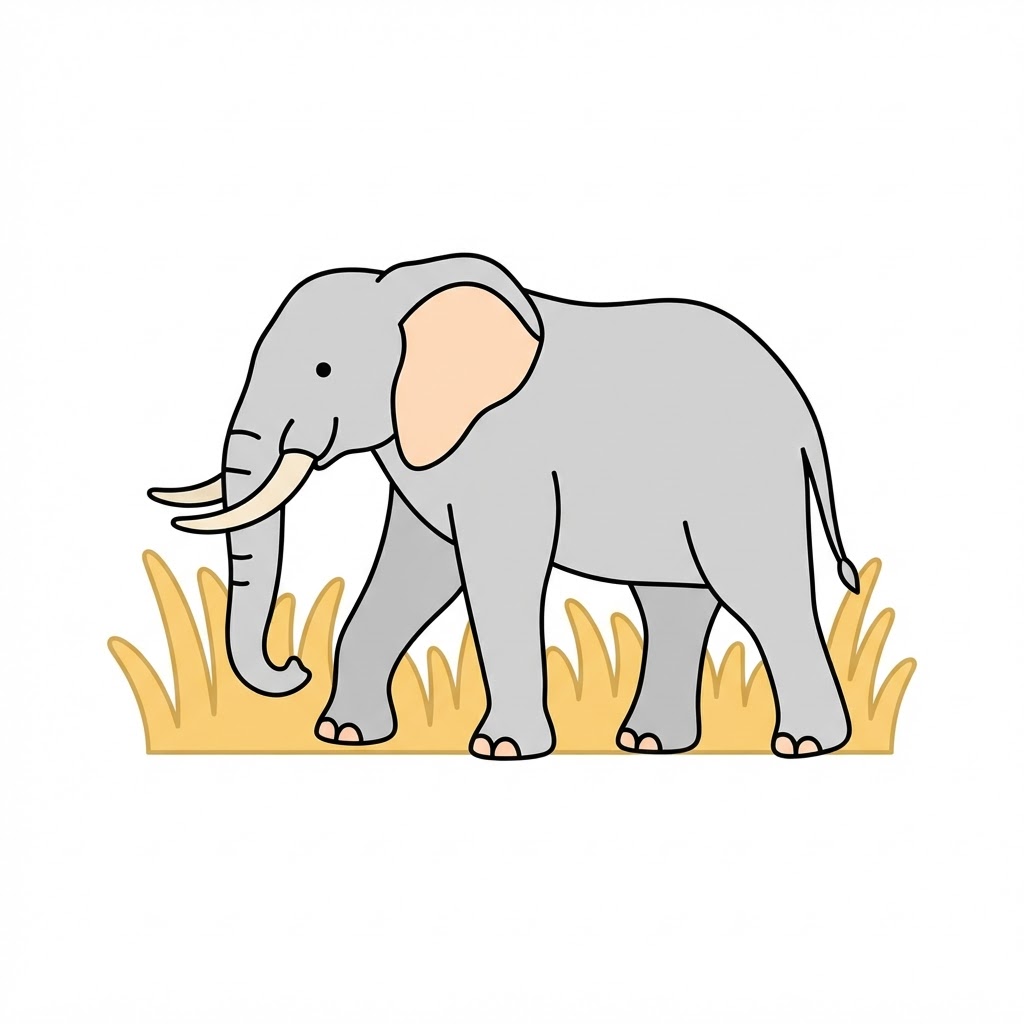
/ˈelɪfənt/A very large grey animal with a trunk and tusks, or a major problem that people avoid discussing.
Tiếng Việt
con voi
E-li-phần-t
Nhấn mạnh vào âm tiết đầu 'E', âm 'phần' đọc nhẹ, và kết thúc bằng âm 't' bật nhẹ ở cuối lưỡi.
Một loài động vật lớn màu xám có vòi và ngà, hoặc một vấn đề lớn mà mọi người né tránh thảo luận.
Meanings
7 meanings
1A very large animal with thick grey skin, large ears, two curved outer teeth called tusks and a long nose called a trunk. There are two main types, the African and the Asian.daily life
Một loài động vật rất lớn với lớp da dày màu xám, tai to, hai răng nanh dài cong gọi là ngà và một chiếc mũi dài gọi là vòi. Có hai loại chính là voi châu Phi và voi châu Á.
“We saw a herd of wild elephants bathing in the river.”
“Chúng tôi đã thấy một đàn voi hoang dã đang tắm dưới sông.”
- The African elephant is the largest land mammal.
- Poachers hunt elephants for their ivory tusks.
- An elephant never forgets.
Người học Việt Nam cần chú ý phân biệt 'trunk' (vòi voi) và 'tusk' (ngà voi). Sử dụng lượng từ 'con' khi nói về loài vật này trong tiếng Việt.
2A major problem or controversial issue that is present but everyone ignores because it is uncomfortable to discuss.business
Một vấn đề lớn hoặc gây tranh cãi đang tồn tại nhưng mọi người đều lờ đi vì cảm thấy không thoải mái khi thảo luận.
“The company's massive debt was the elephant in the room that no one wanted to mention.”
“Khoản nợ khổng lồ của công ty là vấn đề hiển nhiên mà không ai muốn nhắc tới.”
- The elephant in the room was the money that had to be paid in bribes.
- We need to address the elephant in the room before we can move forward.
Đây là một thành ngữ (idiom) rất phổ biến. Khi dịch sang tiếng Việt, bạn có thể dùng cụm 'vấn đề nhạy cảm ai cũng biết nhưng không ai nói' để giữ nguyên ý nghĩa.
3A very large organization or system that is slow to change or react to new situations.finance
Một tổ chức hoặc hệ thống rất lớn nhưng chậm thay đổi hoặc phản ứng chậm với các tình huống mới.
“The elephant banks were once thought to be too large to fail.”
“Những ngân hàng khổng lồ trì trệ đó từng được cho là quá lớn để có thể sụp đổ.”
- Trying to reform such an elephant of a bureaucracy is nearly impossible.
Nghĩa này thường dùng để ám chỉ sự cồng kềnh, kém linh hoạt của các tập đoàn lớn trong kinh tế.
4A xiangqi (Chinese chess) piece that moves two points diagonally and cannot cross the central 'river' of the board.general
Một quân cờ trong cờ tướng di chuyển chéo hai ô và không thể đi qua 'sông' ở giữa bàn cờ (quân Tượng).
“In xiangqi, the elephant is a defensive piece.”
“Trong cờ tướng, quân tượng là một quân cờ phòng thủ.”
Trong tiếng Việt, quân cờ này được gọi là 'Tượng'. Đừng nhầm lẫn với 'Bishop' trong cờ vua.
5Used when counting seconds to ensure each count takes approximately one second.daily life
Được sử dụng khi đếm giây để đảm bảo mỗi lần đếm mất khoảng một giây.
“One elephant, two elephant, three elephant... ready or not, here I come!”
“Một giây, hai giây, ba giây... sẵn sàng chưa, tôi đến đây!”
Đây là cách đếm đặc trưng của trẻ em các nước nói tiếng Anh. Ở Việt Nam, trẻ em thường đếm số trực tiếp (1, 2, 3...) hoặc dùng các cụm từ khác.
6A size of drawing or writing paper, typically 23 by 28 inches.technology
Một khổ giấy vẽ hoặc giấy viết, thường có kích thước 23 x 28 inch.
“The map was printed on elephant folio paper.”
“Bản đồ được in trên giấy khổ voi (elephant folio).”
Đây là thuật ngữ kỹ thuật trong ngành in ấn cổ điển, hiện nay ít dùng trong đời sống hàng ngày.
7Ivory obtained from the tusks of an elephant.history
Ngà voi thu được từ răng nanh của con voi.
“The handle of the antique knife was carved from elephant.”
“Cán của con dao cổ được chạm khắc từ ngà voi.”
Cách dùng này hơi cũ (old-fashioned). Ngày nay người ta thường dùng từ 'ivory' nhiều hơn.
Word bank
Grammar & forms
Grammar
- countable
- countable_uncountable
Inflections
- plural
- elephants
Word family
- elephantineadjective
Usage patterns
- an elephant
- herds of elephants
- elephant in the room
Avoid mistakes
Common mistakes
I saw a elephant.
I saw an elephant.
Use 'an' before words starting with a vowel sound.
The elefant is big.
The elephant is big.
The correct spelling uses 'ph', not 'f'.
There are many elephantes.
There are many elephants.
The plural is formed by adding 's', not 'es'.
The elephant has a long nose called a horn.
The elephant has a long nose called a trunk.
The specific anatomical term for an elephant's nose is 'trunk'.
We ignored the elephant in the house.
We ignored the elephant in the room.
The standard idiom is 'elephant in the room'.
Don't confuse with
- mammoth
An extinct relative of the elephant with long tusks and thick hair.
“Woolly mammoths lived during the Ice Age.”
Use 'elephant' for living animals and 'mammoth' for the prehistoric ones.
- white elephant
A possession that is useless or troublesome, especially one that is expensive to maintain.
“The new stadium has become a white elephant.”
This is a specific idiom; don't confuse it with a literal white-colored elephant.
Academic collocations
Words that pair with "elephant" in formal and academic writing
- verb
- conserveprotectpoachstudy
- adjective
- endangeredwildcaptivemajestic
- noun
- conservationhabitatpopulationsanctuary
- preposition
- ofwith
In context
Real-world examples
- daily life
In Vietnamese Central Highlands, elephants are often seen as a symbol of strength and village community.
Ở Tây Nguyên Việt Nam, voi thường được xem là biểu tượng của sức mạnh và cộng đồng buôn làng.
Voi có vị trí quan trọng trong văn hóa Tây Nguyên, đặc biệt là truyền thống thuần dưỡng voi ở Buôn Đôn.
- business
We need to address the elephant in the room: our project is way over budget.
Chúng ta cần đối mặt với vấn đề hiển nhiên mà ai cũng né tránh: dự án của chúng ta đang vượt quá ngân sách rất nhiều.
Thành ngữ 'elephant in the room' ngày càng phổ biến trong môi trường công sở hiện đại tại Việt Nam khi nói về các vấn đề nhạy cảm.
- academic
Conservationists are working hard to protect the remaining wild elephant populations in Vietnam.
Các nhà bảo tồn đang nỗ lực bảo vệ các quần thể voi hoang dã còn lại ở Việt Nam.
Vấn đề bảo tồn voi là một chủ đề nóng trong giáo dục môi trường và khoa học tại Việt Nam.
Notes for Vietnamese speakers
- Trong văn hóa Việt Nam, voi gắn liền với hình ảnh Hai Bà Trưng và Bà Triệu cưỡi voi đánh giặc, biểu trưng cho lòng yêu nước và sức mạnh dân tộc.
- Lễ hội đua voi ở Đắk Lắk là một sự kiện văn hóa lớn, tôn vinh mối quan hệ giữa con người và loài voi.
- Thành ngữ 'Mười voi không được bát nước xáo' trong tiếng Việt dùng để chỉ những người nói nhiều nhưng làm ít, có nét tương đồng về hình ảnh con voi nhưng ý nghĩa khác với các thành ngữ tiếng Anh.
Etymology
Middle English: from Old French olifant, from Latin elephas, elephant-, from Greek elephas. The word likely has Libyco-Berber origins, referring originally to ivory and later to the animal itself. (Source: Oxford Dictionary of English Etymology).
Exam levels
IELTS
4.0
CEFR
A1
TOEIC
0-250
More in Vietnamese
- Từ điển Lạc Việt (Laban Dictionary)
Tra cứu nghĩa chi tiết và các ví dụ song ngữ Anh-Việt.